Welcome to Your New Beginning: Understanding Islamic Prayer
As a new Muslim, stepping into the beautiful journey of Islam brings so many joys, but it can also feel a little overwhelming at first. One of the most common questions reverts ask is, “How do I perform the daily prayers?” Please take a deep breath and know that you are not expected to know everything overnight. Allah, the Most Merciful, looks at your sincere effort, your patience, and your heart.
In Islam, the daily ritual prayer is known as Salah. Think of Salah not as a burdensome chore or a rigid test, but as a priceless gift—a direct line of communication between you and your Creator. Five times a day, you get to hit the “pause” button on the chaos of the world, stand before Allah, and find ultimate peace. Let us walk through this journey together, step by step.
What is Salah and Why Does It Matter?
Salah is the second pillar of Islam. It anchors your entire day. In a bustling world full of stress, deadlines, and distractions, praying five times a day grounds you. It reminds you who you are, who created you, and where you are ultimately heading.
The Prophet Muhammad (peace and blessings be upon him) taught us that prayer is like a refreshing river flowing right outside your door, washing away spiritual weariness five times a day. You are never alone; whenever you face a challenge, your prayer mat is your sanctuary.
The Five Daily Prayers: A Rhythm for Your Day
Before jumping into the physical movements, it helps to know the schedule. The prayers are spread across the day and night:
- Fajr: The dawn prayer, prayed before sunrise. It starts your day with immense spiritual light.
- Dhuhr: The midday prayer, prayed after the sun passes its peak.
- Asr: The late afternoon prayer, keeping you grounded as the day winds down.
- Maghrib: The sunset prayer, marking the beginning of the Islamic evening.
- Isha: The night prayer, prayed after twilight has completely faded, bringing closure to your day.
Preparation Before You Pray: Wudu and Purity
Before you stand in prayer, you need to prepare both physically and spiritually. This purification process is called Wudu (ablution).
How to Perform Wudu (Simple Steps):
- Make the internal intention in your heart to purify yourself for prayer.
- Wash your hands completely three times.
- Rinse your mouth with water three times, and gently sniff water into your nose and blow it out three times.
- Wash your face three times (from hairline to chin, and ear to ear).
- Wash your arms up to and including the elbows three times (starting with the right arm, then the left).
- Wipe your wet hands over your head from front to back, and wipe the inside and outside of your ears.
- Wash your feet up to and including the ankles three times (starting with the right foot, then the left).
Once your Wudu is complete, ensure your clothing is clean and covers the appropriate parts of the body (awrah), and face towards the Qibla (the direction of the Kaaba in Makkah).
Step-by-Step Guide to Performing Salah
Every daily prayer is made up of units called Rakats. Let us break down a standard Rakat into simple, easy-to-follow actions:
1. The Intention (Niyyah) and Opening Takbir
Stand straight, facing the Qibla. Intend in your heart which prayer you are performing. Raise your hands to your shoulders or ears and say, “Allahu Akbar” (Allah is the Greatest). This locks you into a sacred state where worldly thoughts are left behind.
2. Standing and Reciting Al-Fatiha
Place your right hand over your left hand on your chest or upper abdomen. Recite the opening chapter of the Quran, Surah Al-Fatiha (or if you are still learning, say “SubhanAllah”—Glory be to Allah—as many times as needed until you learn the surah):
- “In the name of Allah, the Entirely Merciful, the Especially Merciful…”
3. Bowing (Ruku)
Say “Allahu Akbar” and bow at the waist, keeping your back straight and placing your hands on your knees. Gently say three times: “Subhana Rabbiyal Azeem” (Glory be to my Lord, the Greatest).
4. Rising from Bowing
Stand back up straight, saying: “Sami’Allahu liman hamidah” (Allah hears the one who praises Him). When fully standing, say: “Rabbana wa lakal hamd” (Our Lord, and to You belongs all praise).
5. Prostration (Sujud)
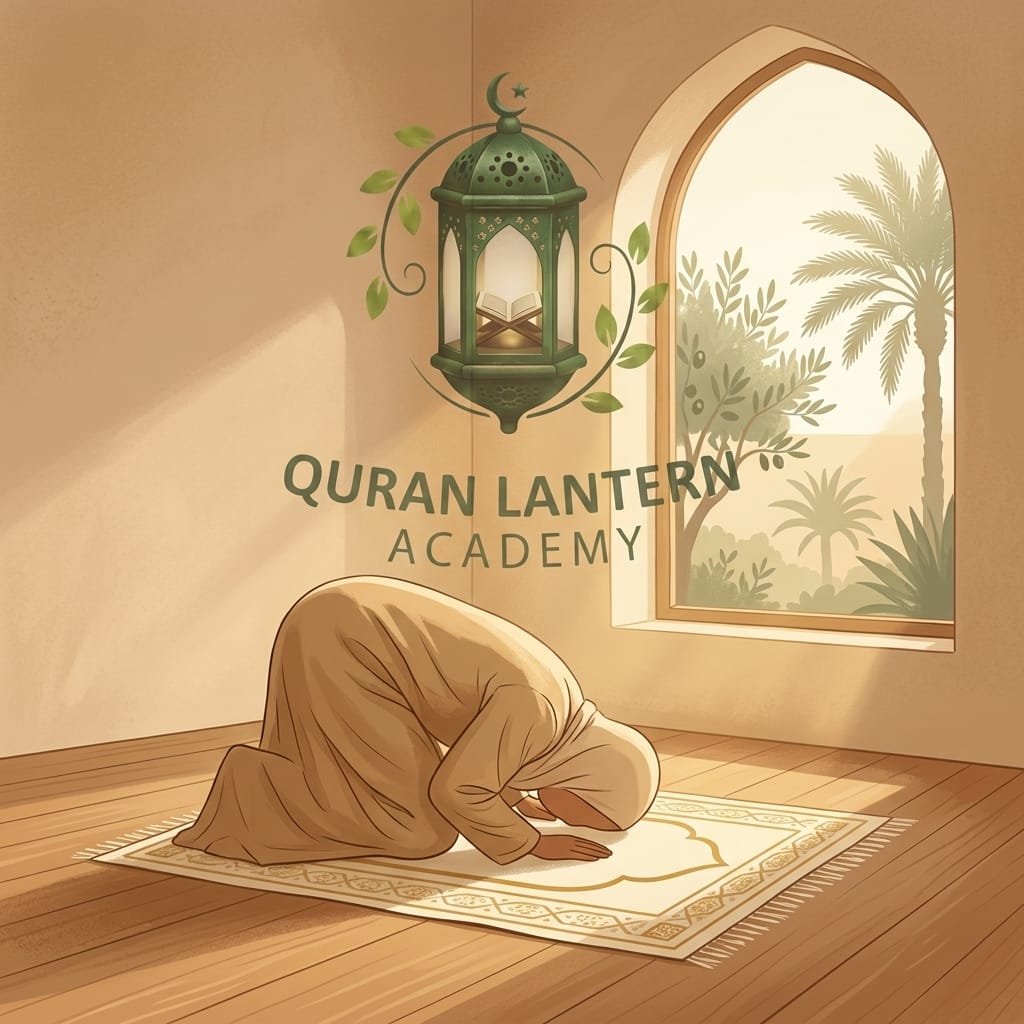
Say “Allahu Akbar” and gently lower yourself to the floor. Seven parts of your body must touch the ground: your forehead and nose, both palms, both knees, and the toes of both feet. This is your closest moment to Allah! Whisper three times: “Subhana Rabbiyal A’la” (Glory be to my Lord, the Most High).
6. Sitting Between Prostrations
Sit up briefly, resting your weight on your left foot while your right foot is upright. Say: “Rabbigh-fir li” (My Lord, forgive me).
Perform a second prostration (Sujud) just like the first one.
How to Apply This in Your Daily Life
Learning how to pray doesn’t happen overnight, and Allah loves consistent, small steps over huge leaps that leave you burnt out. Here is how you can apply this practically:
- Take it One Step at a Time: If learning all five prayers feels heavy, start with just one or two a day, gradually building up to all five.
- Use a Cheat Sheet: Place a phonetic guide or flashcards on a table or wall in front of you while you pray. Allah knows you are learning!
- Be Patient with Yourself: Mistakes happen. If you forget a step or lose your balance, simply correct yourself and keep going. Shaytan (Satan) wants you to give up out of frustration, but your persistence is victory.
- Make Dua (Supplication): After you finish your prayer, take a moment to speak to Allah in your own language. Tell Him about your day, your fears, and your hopes.
Conclusion
Embarking on the journey of Salah is one of the most rewarding milestones in a revert’s life. Remember that Allah sees every single stumbling attempt you make, and He rewards your sincerity immensely. You are never alone on this path. At Quran Lantern Academy, we are dedicated to supporting you through every phase of your beautiful journey into Islam. Explore our beginner-friendly courses, resources, and community support designed specifically to help you thrive. May Allah make your prayers a source of ultimate peace and comfort for your heart.