
Welcome to the Heart of Connection: How to Pray in Islam
As a new Muslim stepping into the beautiful journey of faith, you might find yourself feeling a mix of overwhelming joy and gentle anxiety. One of the most common questions on your mind is likely: how to pray in islam? Take a deep breath. Allah sees your sincere efforts, your stumbles, and your desire to draw closer to Him. Learning Salah (the daily ritual prayer) is not about perfection overnight; it is about progress, patience, and opening a direct line of communication with your Creator.
At Quran Lantern Academy, we walk with you every step of the way. Think of prayer not as a rigid chore or a test you might fail, but as a soothing sanctuary—a daily pause button where you can rest your soul, whisper your worries, and seek guidance. Let us break down how to pray in islam in a step-by-step, easy-to-follow manner designed especially for reverts.
Understanding the Basics Before You Begin
Before jumping into the physical movements, it helps to understand what prayer actually is. In Islam, we pray five times a day. These prayers are spaced out from dawn until nightfall, anchoring our day in mindfulness and gratitude.
1. Purification (Wudu)
Before you stand before Allah, you perform a ritual washing called Wudu (ablution). It involves washing your hands, mouth, nose, face, arms, wiping your head and ears, and washing your feet with clean water. This cleanses you physically and symbolizes clearing your mind and heart of worldly distractions.
2. Covering and Place
You will need a clean space—a simple prayer mat (janamaz) is wonderful, but any clean patch of ground works. For clothing, men must cover from the navel to the knees, and women wear loose clothing that covers the entire body except the face and hands.
Step-by-Step: How to Pray in Islam
Let us walk through a single unit (called a Rak’ah) of prayer. Don’t worry if you don’t know all the Arabic phrases yet. You can use English translations in your heart, or simply repeat simplified phrases until you learn.
Step 1: The Intention (Niyyah) and Opening Takbir
Stand facing the direction of the Holy Kaaba in Makkah (called the Qiblah). Bring your hands up to your shoulders or ears and say:
“Allahu Akbar” (God is the Greatest).
This phrase marks the transition into sacred time. From this moment on, your focus is solely on Allah.
Step 2: Standing and Reciting
Place your right hand over your left hand on your chest or upper stomach. Here, you recite the opening chapter of the Quran, called Al-Fatihah (The Opening). If you are a complete beginner and haven’t memorized it yet, simply praise Allah, say “Subhanallah” (Glory be to God), or silently ask Him to teach you and accept your prayer.
Step 3: Bowing (Ruku)
Bow from the waist, placing your hands gently on your knees, keeping your back straight. Say three times softly:
“Subhana Rabbiyal Azeem” (Glory be to my Lord, the Magnificent).
Step 4: Standing Up Straight
Rise back up to a standing position, saying:
“Sami’allahu liman hamidah” (Allah hears the one who praises Him), and when fully standing, add, “Rabbana lakal hamd” (Our Lord, to You belongs all praise).
Step 5: Prostration (Sujud)
This is the most intimate part of your prayer, where you are physically closest to the ground. Lower yourself down so that your forehead, nose, palms, knees, and toes touch the floor. In this humble position, whisper to Allah. You can say three times:
“Subhana Rabbiyal A’la” (Glory be to my Lord, the Most High).
Because you are closer to Allah during prostration, feel free to make personal supplications (Dua) in your own language here!
Step 6: Sitting and the Final Greeting
Sit back on your heels briefly, then go down for a second prostration. Afterward, sit comfortably on your heels or legs to recite the final testimonies of faith (Tashahhud) and send peace upon the Prophets. Finally, turn your head to the right saying “As-salamu alaykum wa rahmatullah” (Peace be upon you and the mercy of Allah), and then do the same to the left. Congratulations, you have completed your prayer!
How to Apply This in Your Daily Life as a New Muslim
Learning how to pray in islam doesn’t happen overnight, and trying to master all five prayers at once can feel overwhelming. Here are some compassionate, practical tips to help you build this habit sustainably:
- Take It One Step at a Time: If five prayers feel like too much right now, start with one or two a day. Build your stamina and comfort level gradually.
- Use Cheat Sheets: Keep a pocket guide or a printed cheat sheet nearby on the floor with phonetic spellings and English translations. Allah knows your struggle and loves your effort.
- Embrace the Learning Curve: You are allowed to make mistakes. If you forget a step, just keep going. The Prophet Muhammad (peace be upon him) taught us that consistency, even in small amounts, is deeply beloved to Allah.
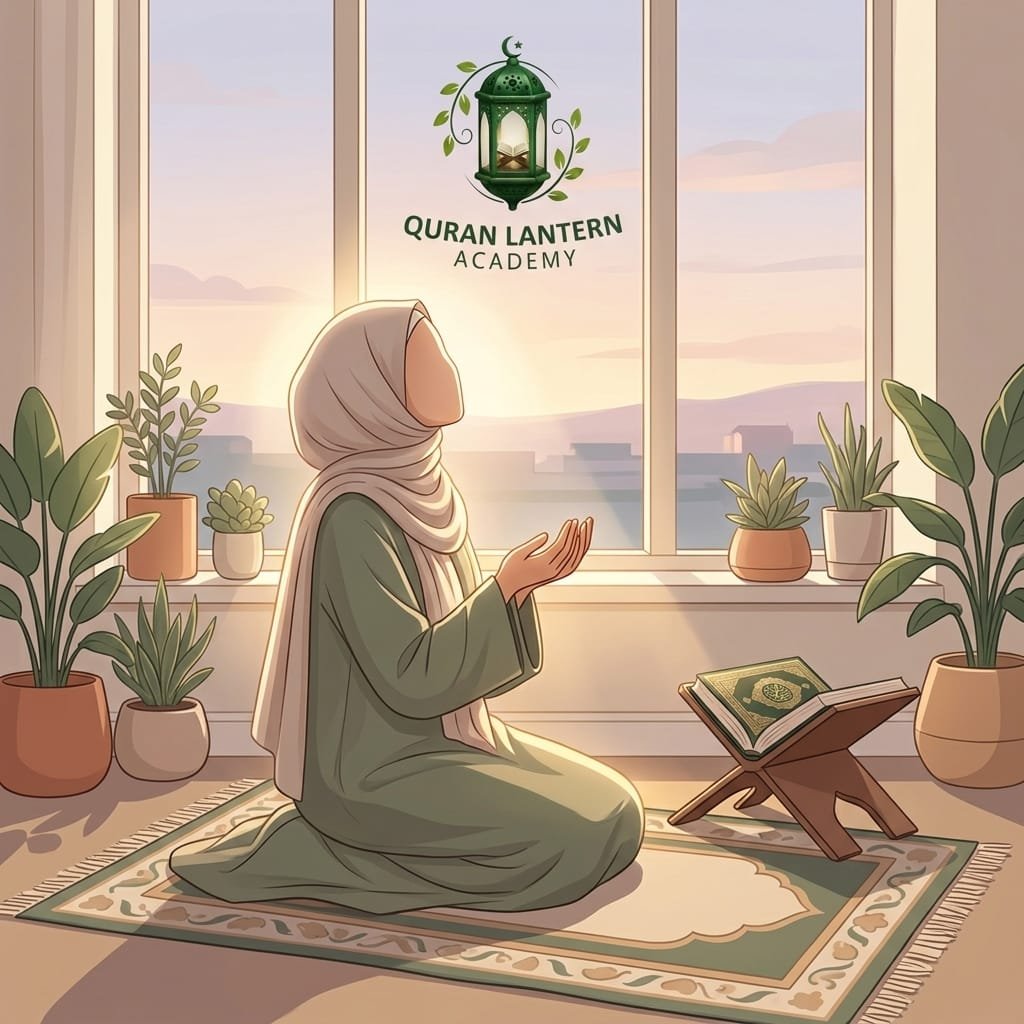
- Create a Sacred Corner: Designate a quiet, beautiful corner in your home with your prayer mat ready. A welcoming physical space makes you look forward to your prayer time.
Conclusion
Mastering how to pray in islam is a lifelong journey of spiritual elevation, comfort, and peace. Remember that you are never alone on this path. At Quran Lantern Academy, we are dedicated to supporting reverts with gentle guidance, clear resources, and an open community. Take a deep breath, trust the process, and enjoy the beautiful peace that comes with bowing your heart to the One who created you.