Welcome to Your Spiritual Journey
Assalamu Alaikum (Peace be upon you) dear brother or sister! Taking the monumental step to embrace Islam is a life-changing moment, and we at Quran Lantern Academy are overjoyed to welcome you to the global family of believers. One of the very first and most beautiful questions new reverts ask is: how to pray in islam?
It is completely normal to feel a little overwhelmed at first. There are movements, Arabic words, and specific physical postures to learn. But please take a deep breath. Allah (God) looks at your sincere heart and your effort, not your perfection. Every stumble and every mispronounced word is written down as an act of love and striving for His sake.
Understanding the Daily Connection (Salah)
In Islam, prayer is known as Salah. Unlike prayers in many other faiths which might feel like a chore or a weekly event, Salah is a direct, five-time-daily meeting with your Creator. Think of it as a spiritual recharge station. Whenever life feels heavy, overwhelming, or confusing, prayer is your sanctuary to pause, breathe, and speak directly to the One who loves you more than anyone else.
There are five obligatory prayers spread throughout the day:
- Fajr: The dawn prayer, prayed before sunrise.
- Dhuhr: The midday prayer, prayed after the sun passes its peak.
- Asr: The late afternoon prayer.
- Maghrib: The sunset prayer, prayed just after the sun goes down.
- Isha: The night prayer, prayed in complete darkness.
Step-by-Step: How to Pray in Islam
Learning how to pray in islam is best done one step at a time. Do not try to memorize everything in one day. Take a look at this foundational breakdown of a single prayer unit (called a Rak’ah):
1. Purification (Wudu)
Before you stand before Allah, you prepare physically and spiritually by performing Wudu (ablution). This involves washing your hands, mouth, nose, face, arms, wiping your head and ears, and washing your feet with clean water. It symbolizes washing away the distractions of the world.
2. Facing the Qiblah and Making Intention
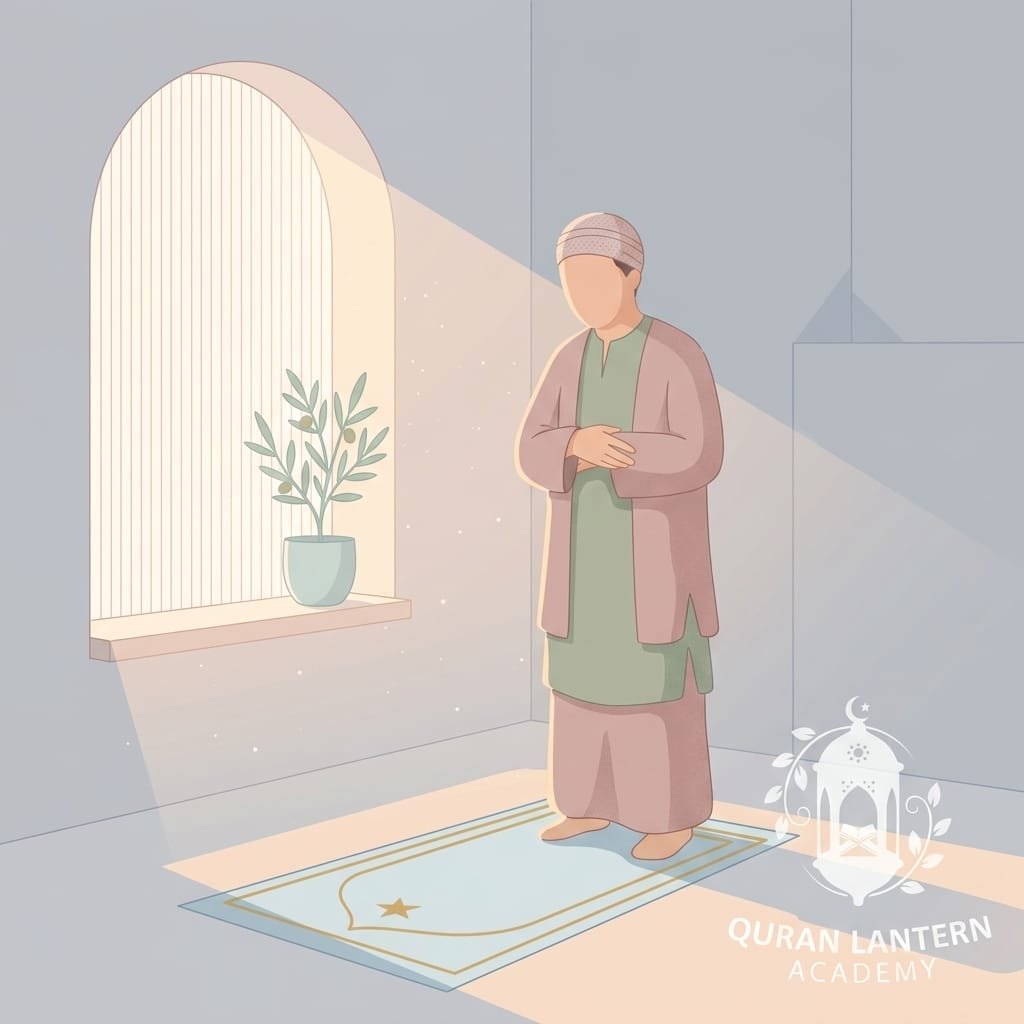
Stand facing the direction of the Kaaba in Mecca (the Qiblah). You do not need to say your intention out loud; simply know in your heart which prayer you are about to perform for the sake of Allah.
3. The Opening Declaration (Takbir)
Raise your hands to your ears or shoulders and say: “Allahu Akbar” (Allah is the Greatest). This marks the sacred boundary where you leave the worldly life behind and enter into a conversation with your Lord.
4. Standing and Reciting
Place your right hand over your left hand on your chest or stomach. You will softly recite the opening chapter of the Quran, known as Surah Al-Fatihah. If you are brand new and have not memorized this yet, do not worry! You can quietly repeat phrases of remembrance like “SubhanAllah” (Glory be to Allah) or simply listen intently, learning bit by bit.
5. Bowing (Ruku)
Bow from your waist, keeping your back straight, and place your hands on your knees. Gently say three times: “Subhana Rabbiyal Adheem” (Glory be to my Lord, the Greatest).
6. Rising and Prostrating (Sujud)
Stand up straight briefly, saying “Sami Allahu liman hamidah” (Allah hears the one who praises Him). Then, lower yourself gently to the floor in prostration (Sujud). Your forehead, nose, palms, knees, and toes should touch the ground. This is your closest physical point to Allah. Whisper three times: “Subhana Rabbiyal A’la” (Glory be to my Lord, the Most High).
7. Sitting and Closing (Tashahhud)
After completing the required number of prostrations for your prayer units, you sit on your heels and recite the final testimonies of faith, concluding your prayer by turning your head to the right and left, saying “As-salamu alaykum wa rahmatullah” (Peace and mercy of Allah be upon you) to the angels and those around you.
How to Apply This in Your Daily Life
Transitioning into a new lifestyle can feel daunting, but consistency is the key to mastering how to pray in islam. Here are a few compassionate, practical tips for your everyday routine:
- Take It One Prayer at a Time: If five prayers feel overwhelming right now, start with just one or two a day. Build the habit gently until your heart naturally craves all five.
- Use Cheat Sheets: Print out a phonetic guide or keep your smartphone nearby with a prayer app. There is no shame in reading from a paper or screen while you are learning.
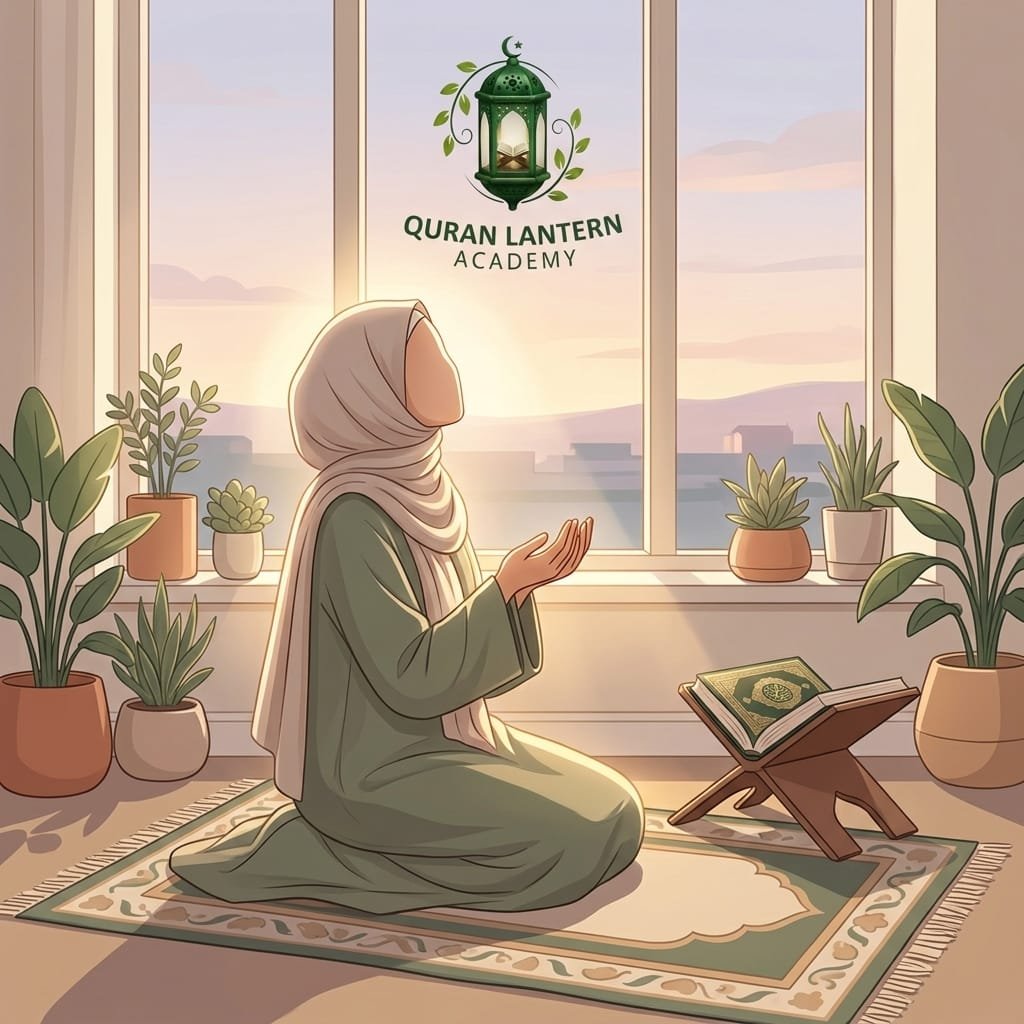
- Create a Sacred Space: Designate a clean, quiet corner in your home with a comfortable prayer rug. Making it visually inviting will make you excited to step onto it.
- Be Patient With Yourself: Remember that consistency beats intensity. Even if your pronunciation is clumsy, your sincerity shines brighter than gold in the sight of Allah.
Conclusion
Learning how to pray in islam is a beautiful, lifelong journey of drawing closer to your Creator. You are never alone on this path. At Quran Lantern Academy, we are dedicated to supporting, guiding, and walking hand-in-hand with you every step of the way. May Allah make your prayers a source of deep peace, comfort, and immense joy in your heart. Welcome home!