Welcome to Your New Spiritual Journey
As a new Muslim, stepping onto the path of Islam is one of the most beautiful and life-changing decisions you will ever make. You may feel a mix of overwhelming joy and gentle nervousness, especially when you think about daily worship. One of the very first questions on your mind is likely: how to pray in islam?
Take a deep breath and let your heart settle. Allah, the Most Merciful, knows your intentions, your struggles, and your sincere desire to please Him. Learning the daily prayers—known as Salah—is not a test you can fail; it is a gradual, loving conversation between you and your Creator. At Quran Lantern Academy, we are honored to walk beside you on this blessed journey, making every step clear, accessible, and deeply comforting.
Why Prayer Matters in Islam
In Islamic tradition, prayer is considered the second pillar of Islam and the very backbone of a believer’s faith. Imagine having a direct, personal appointment with the King of the universe five times every single day. That is what prayer offers you. It is a sacred pause button in a chaotic world where you can drop your worries, seek forgiveness, find profound inner peace, and realign your heart with your ultimate purpose.
Don’t worry if you don’t memorize everything overnight. Islam is a religion of ease, not hardship. Every single effort you make to learn how to pray in islam is seen, appreciated, and heavily rewarded by Allah.
Understanding the Basics Before You Begin
Before physically performing the prayer, there are a few foundational steps to ensure you are spiritually and physically prepared:
- Purification (Wudu): Before praying, Muslims perform a ritual washing called wudu. This cleanses the body and symbolizes clearing the mind and soul of worldly distractions.
- Modest Clothing: Dress in clean, loose clothing that covers the body appropriately. For men, this generally means from the navel to the knees. For women, it means covering the entire body except for the face and hands.
- A Clean Space: Find a quiet, clean spot in your home and roll out a prayer mat (called a sajjadah) facing the direction of the Kaaba in Makkah (known as the Qibla).
- Timing: Prayers are performed at five specific times throughout the day: dawn (Fajr), midday (Dhuhr), afternoon (Asr), sunset (Maghrib), and night (Isha).
Step-by-Step: How to Pray in Islam
Each prayer is made up of units called Rakats (cycles of movement and recitation). Let’s break down a single unit so you can master the basics of how to pray in islam:
1. The Intention (Niyyah) and Opening Takbir
Stand facing the Qibla with your feet slightly apart. You do not need to say your intention out loud; simply let your heart know which prayer you are about to perform. Raise your hands to your ears or shoulders and say: “Allahu Akbar” (God is the Greatest). This phrase officially enters you into the sacred state of prayer.
2. Standing and Reciting
Place your right hand over your left hand on your chest or upper stomach. Look down at the spot where your forehead will touch the ground. You will softly recite the opening chapter of the Quran, called Surah Al-Fatihah. If you are still learning Arabic, don’t worry! You can recite an English translation in your heart while you practice learning the short Arabic verses.
3. Bowing (Ruku)
Say “Allahu Akbar” again and bow from the waist, placing your hands firmly on your knees, keeping your back straight and parallel to the floor. While bowing, quietly say: “Subhana Rabbiyal Adheem” (Glory be to my Lord, the Greatest) three times.
4. Rising from the Bow
Stand straight up again, raising your hands slightly, and say: “Sami Allahu liman hamidah” (Allah hears whoever praises Him), followed by “Rabbana wa lakal hamd” (Our Lord, and to You belongs all praise).
5. Prostration (Sujud)
Say “Allahu Akbar” and gently lower yourself to the floor, placing your forehead, nose, palms, knees, and toes firmly on the ground. This is the closest you will ever be to Allah in this life, so pour your heart out in silent du’a (supplication). While in prostration, say: “Subhana Rabbiyal A’la” (Glory be to my Lord, the Most High) three times.
6. Sitting Briefly and Second Prostration
Sit up on your knees for a brief moment, saying “Allahu Akbar,” and then perform a second prostration just like the first one. This completes one full Rakat!
How to Apply This in Your Daily Life
Transitioning into a lifestyle that includes five daily prayers can feel daunting if you try to change everything at once. Here are a few compassionate tips on how to apply this in your daily life without feeling overwhelmed:
- Take it One Step at a Time: If five prayers feel like too much right now, start with just one or two a day. Build the habit slowly and consistently. Consistency is deeply loved by Allah, even if the deeds are small.
- Use a Cheat Sheet: Keep a small notebook or a printed guide nearby during your prayer to read the phonetic transliterations and translations until you memorize them.
- Be Patient with Yourself: Your mind might wander, you might forget which step you are on, or you might mispronounce a word. That is completely normal! Allah judges you by your sincere effort, not your perfection.
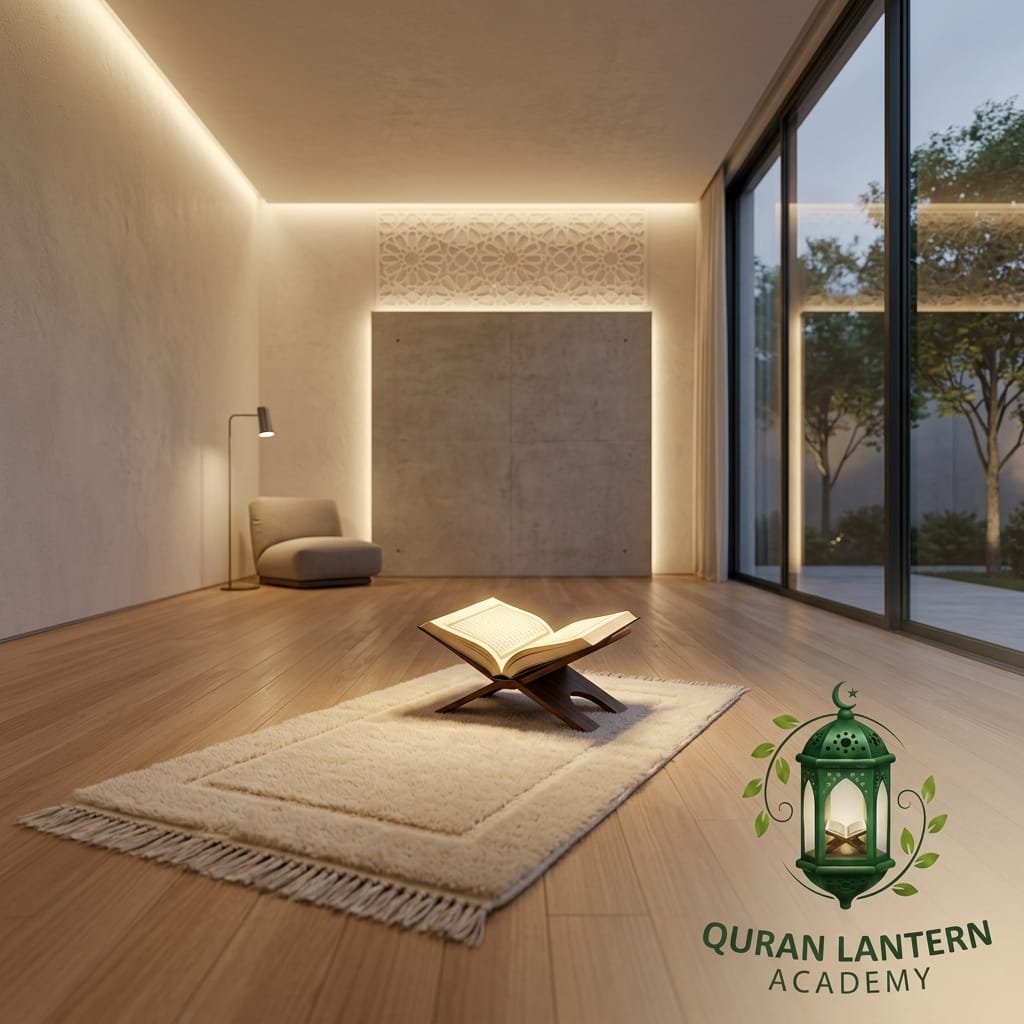
- Create a Sacred Space: Designate a clean, quiet corner in your home just for prayer with a comfortable mat and soft lighting. Making it inviting will make you look forward to your daily meetings with your Creator.
Conclusion
Learning how to pray in islam is a profound act of devotion that will bring immense tranquility, structure, and spiritual nourishment into your life. Remember, you do not have to walk this path alone. At Quran Lantern Academy, we offer supportive, structured learning programs designed specifically to guide new Muslims with patience, clarity, and love. Embrace every small victory, trust the process, and open your heart to the peace that awaits you on your prayer mat.