Welcome to Your Journey of Beautiful Character
Assalamu Alaikum (Peace be upon you), dear brother or sister! Taking the Shahada and stepping into Islam is one of the most profound and beautiful moments of your life. As a new Muslim, you might sometimes feel overwhelmed by all the new Arabic terms, rules, and daily practices. Take a deep breath. Islam is a journey, not a race. Today, let us explore a concept that is at the very heart of our faith: what is akhlaq in islam examples and importance.
When people ask about the core of Islam, they often think of prayers, fasting, and charity. While these pillars are essential, Prophet Muhammad (peace be upon him) taught us that our entire faith is elevated by our character. Let us break this down together in a simple, loving way so you can apply it easily in your daily life.
What Is Akhlaq in Islam? (The Definition)
In the Arabic language, Akhlaq (أخلاق) is the plural word for Khuluq, which simply means character, moral behavior, disposition, or nature. In Islamic terminology, akhlaq refers to the way a person behaves, reacts, and treats the Creator (Allah) and all of creation—including humans, animals, and the environment.
Think of akhlaq as your spiritual mirror. When you look into it, it reflects what is truly inside your heart. Having good akhlaq means embodying the teachings of the Quran and the noble behavior of Prophet Muhammad (peace be upon him). In fact, when the beloved wife of the Prophet, Aisha (may Allah be pleased with her), was asked about his character, she beautifully replied: “His character was the Quran.” (Sahih Muslim). What an inspiring goal for all of us!
The Importance of Good Akhlaq in Islam
Why does character matter so much in Islam? You might be surprised to learn how heavily the Quran and Sunnah (traditions of the Prophet) emphasize good behavior. Here is why akhlaq holds such a massive status:
- It was the main mission of the Prophet: Prophet Muhammad (peace be upon him) once stated, “I was sent only to perfect good moral character.” (Al-Adab Al-Mufrad). His primary job description was to teach people how to treat one another with kindness, justice, and respect.
- It is the heaviest thing on the Judgment Day scale: The Prophet (peace be upon him) taught us that nothing is heavier on the scale of a believer on the Day of Resurrection than good akhlaq (Tirmidhi).
- It brings you closest to the Prophet: The people who will be closest to Prophet Muhammad (peace be upon him) on the Day of Judgment are those with the best character (Tirmidhi).
- It is a reflection of your faith (Iman): The Prophet said that the believers with the most complete faith are those with the best character (Abu Dawud).
Practical Examples of Akhlaq in Islam
To truly understand what is akhlaq in islam examples and importance, we need to look at practical, everyday scenarios. Akhlaq is divided into two main categories: good character (Akhlaq Hasanah) and bad character (Akhlaq Sayyiah). Let us focus on the beautiful examples we should strive for:
1. Honesty and Truthfulness (Sidq)
Being honest in your speech and actions, even when it is difficult, is a hallmark of a Muslim. Before prophethood, Prophet Muhammad was famously known as Al-Amin (The Trustworthy). As a Muslim, your word should be your bond.
2. Patience (Sabr)
Life brings tests—traffic jams, difficult family members, or personal struggles. Responding with patience rather than anger or despair is a high form of akhlaq. Allah loves those who are patient.
3. Kindness and Gentleness (Rifq)
The Prophet said, “Verily, Allah is gentle and loves gentleness in all matters.” (Sahih Bukhari). This includes speaking softly, not raising your voice unnecessarily, and being gentle with children, the elderly, and animals.
4. Forgiveness and Controlling Anger
It is human to get angry, but holding onto grudges harms your own heart. Letting go of mistakes made by others and choosing to forgive is heavily rewarded by Allah.
5. Respecting Neighbors and Family
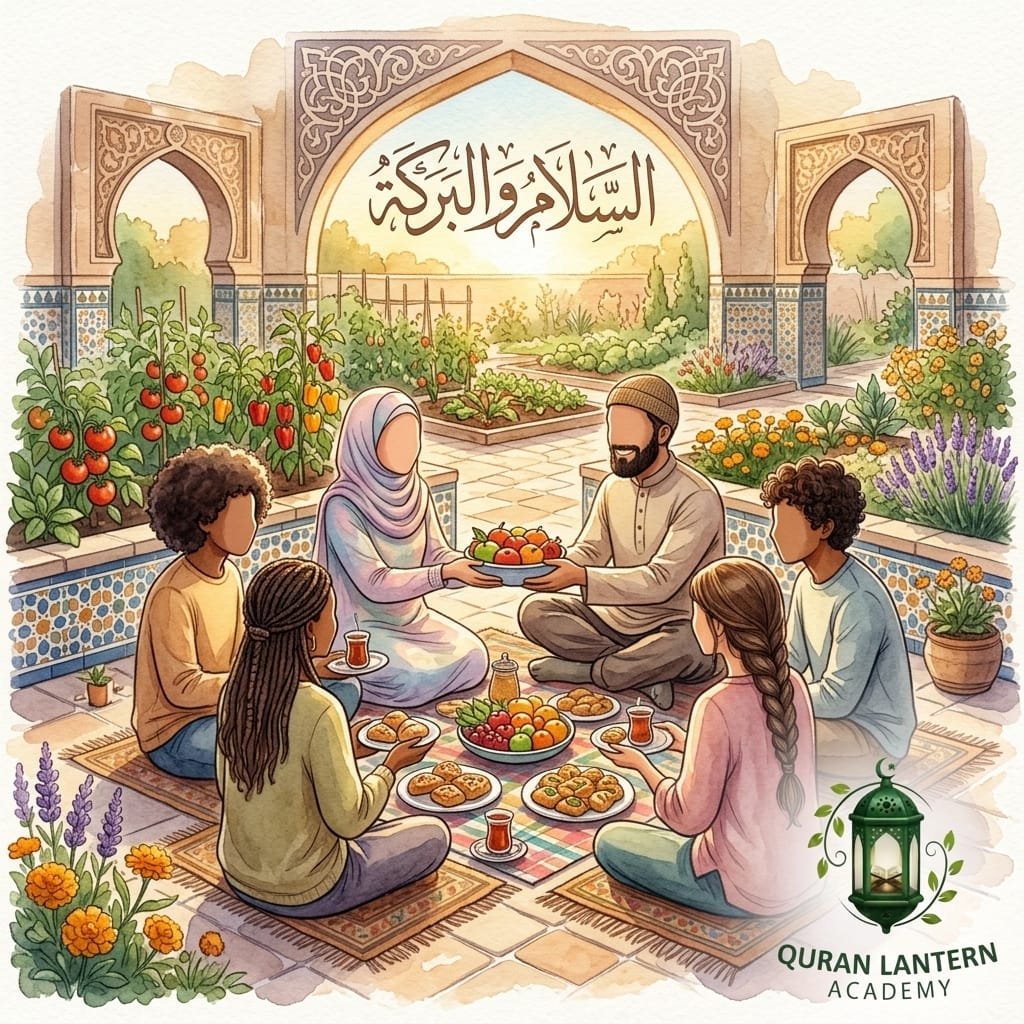
Islam places immense weight on how you treat the people closest to you. The Prophet emphasized the rights of neighbors so strongly that he joked he thought they would inherit from him. Good akhlaq starts right inside your own home.
How to Apply Akhlaq in Your Daily Life as a Revert
As a new Muslim, you might worry that you need to change everything overnight. Please do not stress! Building good character is a lifelong garden that you water day by day. Here are a few simple ways to practice good akhlaq starting today:
- Smile often: The Prophet (peace be upon him) taught that even smiling at your brother or sister is an act of charity (Tirmidhi). It opens hearts instantly.
- Spread the greeting of peace: Say “Assalamu Alaikum” to Muslims you meet, even if you do not know them well. It spreads love and brotherhood.
- Listen more, argue less: If someone disagrees with you or criticizes Islam, respond with calmness, wisdom, and a gentle smile rather than getting defensive.
- Fulfill your promises: If you say you will do something, try your absolute best to follow through. Reliability builds immense trust.
- Make a daily du’aa (supplication): Ask Allah sincerely: “O Allah, just as You made my external form beautiful, make my character beautiful.” (Ahmad).
Conclusion
Understanding what is akhlaq in islam examples and importance gives us a clear roadmap to becoming not just better Muslims, but better human beings. Remember, every small act of kindness—holding a door, returning a lost item, speaking a kind word, or forgiving someone who wronged you—is recorded as worship when done for the sake of Allah.
Here at Quran Lantern Academy, we are honored to walk beside you on this incredible journey of learning and spiritual growth. Be patient with yourself, celebrate your small victories, and let your beautiful character be a shining light for the world around you. May Allah bless your efforts, fill your heart with peace, and beautify your character inside and out!