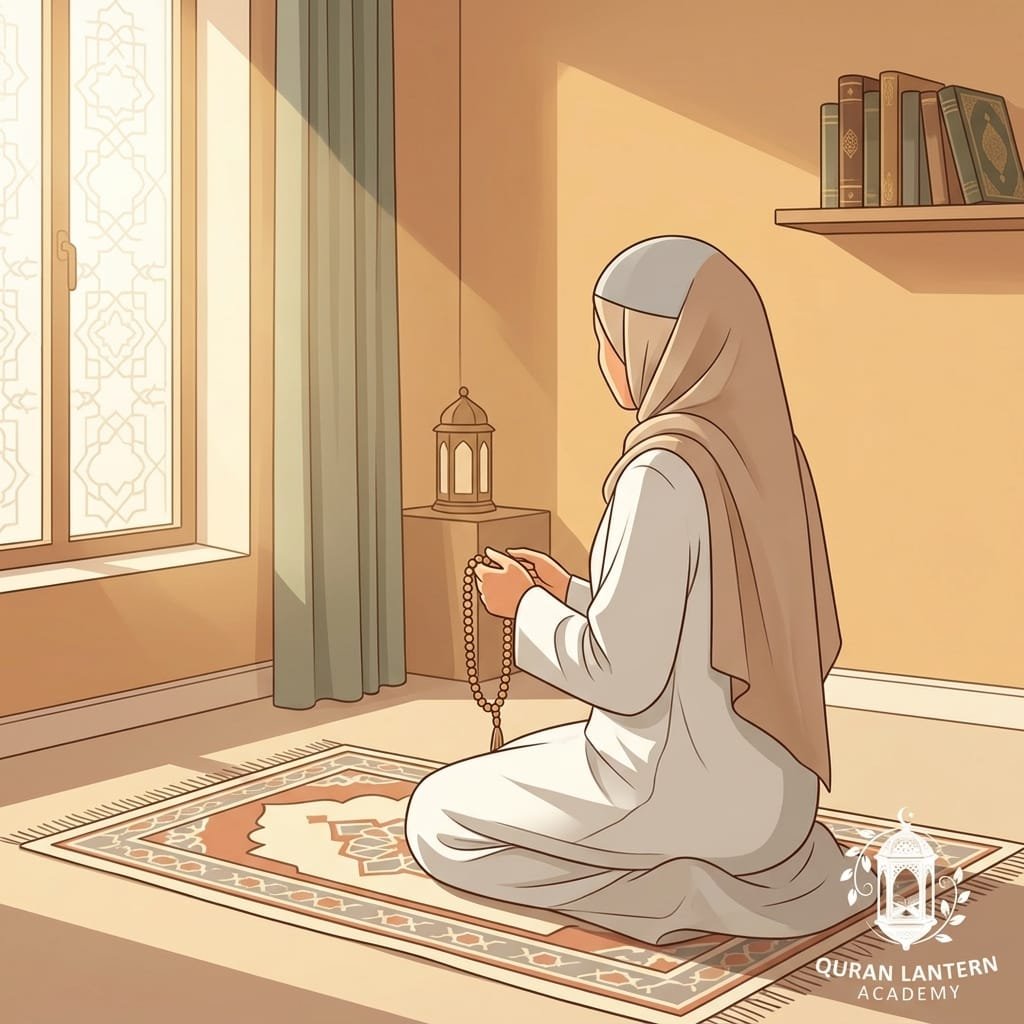
Welcome to the Heart of Islamic Worship
Assalamu Alaikum (Peace be upon you), dear friend! Taking the step to embrace Islam is a life-changing journey, and we want to warmly welcome you to the Quran Lantern Academy family. If you are a new Muslim (revert), you might look at the daily prayers—known in Arabic as Salah—and feel a mixture of excitement and nervousness. You are not alone! Learning a brand-new routine, especially one involving a different language and physical movements, can feel overwhelming.
Please take a deep breath and give yourself grace. Allah (God) sees your sincere efforts, every stumble, and every whispered attempt to connect with Him. The Prophet Muhammad (peace be upon him) taught us that learning takes time, and even those who struggle with recitation receive double the reward for their perseverance. Today, we are going to break down the Islamic prayer into simple, digestible steps so you can approach your mat with confidence and peace.
What is Salah and Why Do We Do It?
Before jumping into the physical steps, let’s understand what Salah truly is. In Arabic, Salah means connection or direct communication. Think of it as your daily spiritual appointment with the Creator of the universe. Five times a day, the hustle and bustle of the world pauses. You step away from your worries, stand before Allah, and whisper your hopes, fears, and gratitude.
Far from being a rigid chore, Salah is meant to be a sanctuary of peace. It is a moment to recharge your soul, seek forgiveness, and find grounding in a chaotic world.
Preparing for Prayer: The Basics
Before you begin your conversation with Allah, a few physical and environmental preparations are necessary:
- Cleanliness (Wudu): You must perform ritual ablution (washing specific parts of the body like hands, face, and feet with water) before praying. Don’t worry if you haven’t mastered this yet; we have plenty of guides at Quran Lantern Academy to help you!
- Modest Clothing: Wear clean clothes that cover your ‘awrah (parts of the body that should be concealed according to Islamic guidelines—generally everything except the face and hands for women, and from the navel to the knees for men).
- A Clean Space: Find a quiet, clean spot in your home. You can use a dedicated prayer rug (sajadah), or simply ensure the floor is clean.
- Facing the Qiblah: Face the direction of the Kaaba in Mecca. If you aren’t sure which way that is, downloading a smartphone compass app makes this very easy.
The Structure of Prayer: Understanding “Units” (Rak’ahs)
Islamic prayers are made up of cycles called Rak’ahs (units). Each prayer has a specific number of Rak’ahs:
- Fajr (Dawn): 2 Rak’ahs
- Dhuhr (Midday): 4 Rak’ahs
- Asr (Afternoon): 4 Rak’ahs
- Maghrib (Sunset): 3 Rak’ahs
- Isha (Night): 4 Rak’ahs
Step-by-Step Guide to Performing One Rak’ah
Let’s walk through a single unit of prayer together. Once you learn one Rak’ah, you can easily replicate it!
1. The Intention (Niyyah) and Opening Takbir
Stand straight, facing the Qiblah. You don’t need to say your intention out loud; just know firmly in your heart which prayer you are about to perform. Raise your hands to your shoulders or ears and say: “Allahu Akbar” (God is the Greatest). This marks the sacred boundary where you leave the outside world behind.
2. Standing and Reciting
Place your right hand over your left hand on your chest or upper stomach. Look down at the spot where your head will touch the ground during prostration. Recite the opening chapter of the Quran, Surah Al-Fatihah (The Opening). If you are still memorizing it, it is completely okay to read from a paper or phone, or simply say “SubhanAllah” (Glory be to Allah) and praise Him in your native language until you learn the Arabic text.
3. Bowing (Ruku)
Say “Allahu Akbar” again and bow from your waist, keeping your back straight and placing your hands on your knees. While bowing, gently say three times: “Subhana Rabbiyal ‘Azeem” (Glory be to my Lord, the Magnificent).
4. Rising from the Bow
Stand straight up again, saying: “Sami’Allahu liman hamidah” (Allah hears whoever praises Him), followed by “Rabbana wa lakal hamd” (Our Lord, and to You belongs all praise).
5. Prostration (Sujud) – The Closest You Are to Allah
Say “Allahu Akbar” and gently lower yourself to the floor. Seven parts of your body should touch the ground: your forehead and nose, both hands, both knees, and the toes of both feet. This is the most beloved posture in prayer because the Prophet Muhammad (peace be upon him) said a servant is closest to their Lord while in prostration. Here, pour your heart out in silent supplication (Du’a) and say three times: “Subhana Rabbiyal A’la” (Glory be to my Lord, the Most High).
6. Sitting briefly, then Second Prostration
Sit up briefly on your knees, saying “Allahu Akbar,” take a brief pause to say “Rabbighfir li” (My Lord, forgive me), and then go down for a second prostration, repeating the praise.
How to Apply This in Your Daily Life
Reading about prayer is wonderful, but transformation happens through action. Here are a few practical tips to help you build this beautiful habit without burning out:
- Take it One Step at a Time: Don’t feel pressured to learn all five prayers perfectly on day one. Start with one prayer a day, and gradually add the others as you build confidence.
- Use Cheat Sheets: Place a printed phonetic guide or flashcards on a small music stand in front of your prayer mat. There is zero shame in reading your lines while you learn!
- Celebrate Small Wins: Did you manage to perform Wudu and complete two Rak’ahs today? Alhamdulillah (Praise be to Allah)! Celebrate that victory. Consistency matters much more than immediate perfection.
- Be Gentle With Yourself: Distractions happen. If your mind wanders during prayer, simply gently bring your focus back. Allah looks at the effort of your heart, not just the mechanical perfection of your movements.
Conclusion
Embarking on the journey of Salah is truly one of the most rewarding milestones of being a new Muslim. It is a lifelong gift of direct communication with your Creator, a daily dose of tranquility, and your anchor in this world. Remember, you do not have to walk this path alone. Here at Quran Lantern Academy, we are honored to support, guide, and walk right beside you every step of the way. May Allah make your prayers a source of deep joy, comfort, and immense reward. Ameen!