
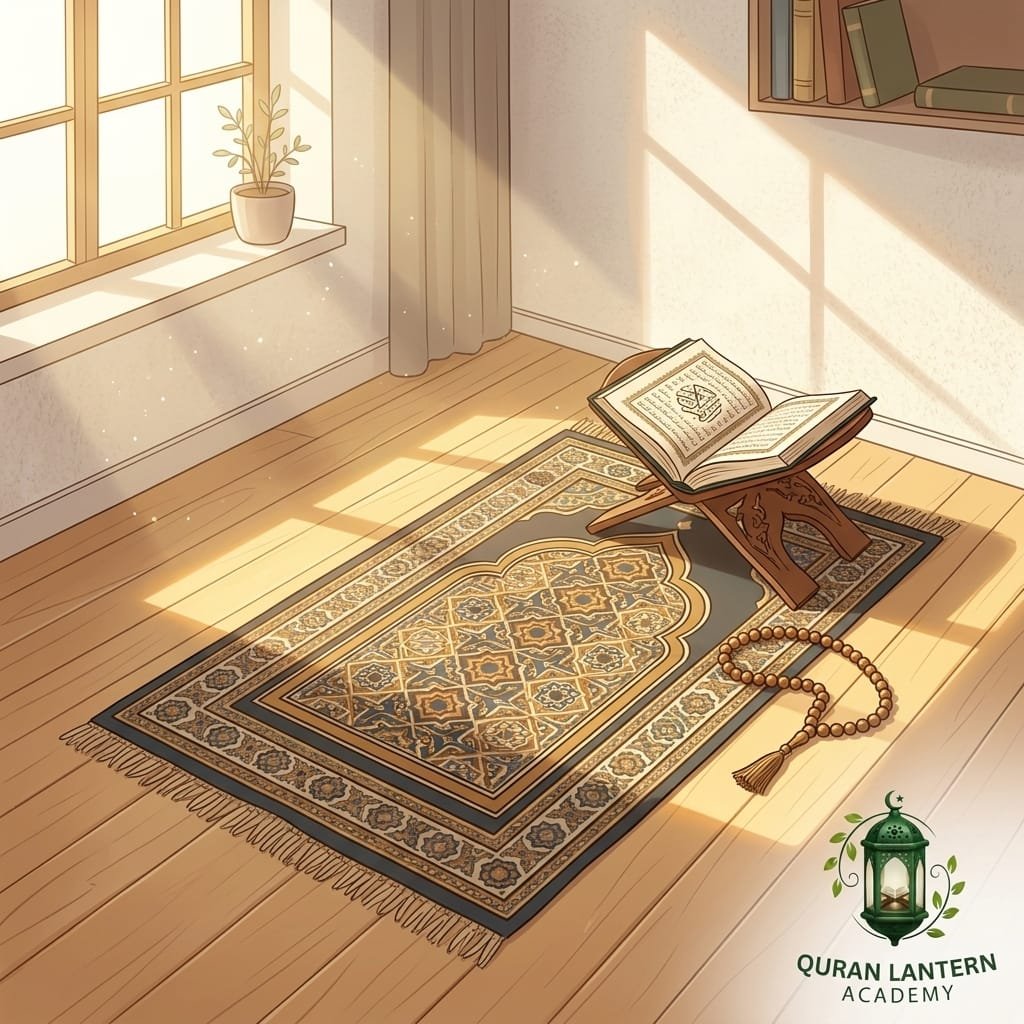
Welcome to Your Beautiful Journey of Prayer
As a new Muslim, stepping onto the path of Islam is one of the most profound and beautiful decisions you will ever make. Among all the acts of worship, salah prayer times and steps for beginners often feels like the most daunting hurdle. You might worry about remembering the Arabic words, getting the physical movements right, or keeping track of the daily schedule.
Please take a deep breath and let go of that anxiety. Allah, the Most Merciful, does not look for perfection from you; He looks for your sincere effort, your love, and your desire to connect with Him. Every stumble and every mispronounced word is enveloped in His boundless mercy. This guide is designed to gently walk you through salah prayer times and steps for beginners so you can establish a comforting, daily routine of conversation with your Creator.
Understanding the Rhythm: Salah Prayer Times
Before diving into the physical actions, it helps to understand how the day is structured. Unlike weekly or yearly traditions, Islam invites us to pause our worldly lives five times a day. These intervals act as spiritual anchors, keeping our hearts grounded in peace.
The Five Daily Prayers
- Fajr: The dawn prayer, performed before sunrise. It is a quiet, beautiful way to greet the morning and start your day under Allah’s protection.
- Dhuhr: The midday prayer, performed after the sun passes its highest point. It offers a calming oasis in the middle of a busy workday.
- Asr: The afternoon prayer. It reminds us to refocus as the afternoon winds down toward the evening.
- Maghrib: The sunset prayer, performed just after the sun dips below the horizon. It marks the transition from day to night.
- Isha: The night prayer, performed after twilight has completely faded, bringing a peaceful close to your day.
To help you track these changing moments accurately, many smartphone apps like Athan or Muslim Pro can notify you according to your exact geographical location.
Preparation: Purity Before Prayer
Before you begin your prayer, two preliminary steps are required to prepare your body and mind:
- Wudu (Ablution): A ritual washing of the hands, mouth, nose, face, arms, head, and feet with clean water. It is a physical and spiritual cleansing that helps you transition from worldly distractions to a sacred state.
- Modest Clothing: Dressing in clean, modest clothing that covers your ‘awrah (private areas). For men, this is generally from the navel to the knee. For women, it includes the entire body except the face, hands, and feet.
- A Clean Space: Finding a quiet, clean spot in your home and rolling out a prayer rug (janamaz).
Mastering Salah Prayer Times and Steps for Beginners
Each of the five prayers is made up of units called Rak’ahs (cycles of movement and recitation). Let us break down a single cycle so you can practice step-by-step.
Step 1: The Intention (Niyyah) and Standing
Stand facing the direction of the Kaaba in Mecca (the Qibla). You do not need to say your intention out loud; simply know in your heart which prayer you are about to perform.
Step 2: The Opening Declaration (Takbir)
Raise your hands to your ears (or shoulders) and say clearly: “Allahu Akbar” (God is the Greatest). This marks your entry into a sacred conversation, shutting out the rest of the world.
Step 3: Recitation (Qiyam)
Place your right hand over your left hand on your chest or upper abdomen. Recite the opening chapter of the Quran, known as Surah Al-Fatiha:
“In the name of Allah, the Entirely Merciful, the Especially Merciful. All praise is due to Allah, Lord of the worlds…” (If you are still learning Surah Al-Fatiha, don’t worry! You can quietly repeat “SubhanAllah” (Glory be to Allah) until you memorize it.)
Step 4: Bowing (Ruku)
Bow from the waist, placing your hands on your knees, keeping your back flat. Quietly say: “Subhana Rabbiyal Azeem” (Glory be to my Lord, the Magnificent) three times.
Step 5: Standing Up Straight
Rise back to a standing position, saying: “Sami’allahu liman hamidah” (Allah hears whoever praises Him), followed by “Rabbana lakal hamd” (Our Lord, to You belongs all praise).
Step 6: Prostration (Sujud)
This is the most intimate position of prayer, where your forehead, nose, palms, knees, and toes touch the ground. Whisper: “Subhana Rabbiyal A’la” (Glory be to my Lord, the Most High) three times. Feel free to talk to Allah in your native language here, asking Him for whatever your heart desires.
Step 7: Sitting and The Conclusion (Tasleem)
Sit back on your heels briefly, then go down for a second prostration. Afterward, sit fully upright to recite the final testimonies of faith (Tahiyyah). Conclude your prayer by turning your face to the right and saying “As-salamu alaykum wa rahmatullah” (Peace be upon you and the mercy of Allah), and repeating it to the left.
How to Apply This in Your Daily Life
Transitioning into regular prayers can feel overwhelming if you try to do everything at once. Here is a practical, stress-free strategy for applying salah prayer times and steps for beginners to your daily routine:
- Take it One Step at a Time: If praying five times a day feels like too much initially, start with one or two prayers, such as Maghrib or Fajr, and gradually build up to all five. Allah loves consistent, small deeds over massive actions done all at once.
- Use Cheat Sheets: Print out a phonetic guide or keep your phone nearby with the transliteration displayed. There is no shame in reading from a paper or screen while you learn!
- Connect with a Mentor: Having a supportive community makes all the difference. Reach out to local mosques or trusted online platforms for guidance.
- Be Patient with Yourself: Your brain is learning new motor skills and a new language. Treat yourself with the same compassion that Allah extends to you.
A Warm Closing from Quran Lantern Academy
Embarking on the journey of learning salah prayer times and steps for beginners is a courageous and beautiful step toward a deeper relationship with your Creator. Remember that you are never alone on this path. At Quran Lantern Academy, we are dedicated to supporting reverts with compassionate, clear, and structured Islamic education. May Allah make your transition easy, fill your heart with tranquility, and accept every sincere step you take toward Him.