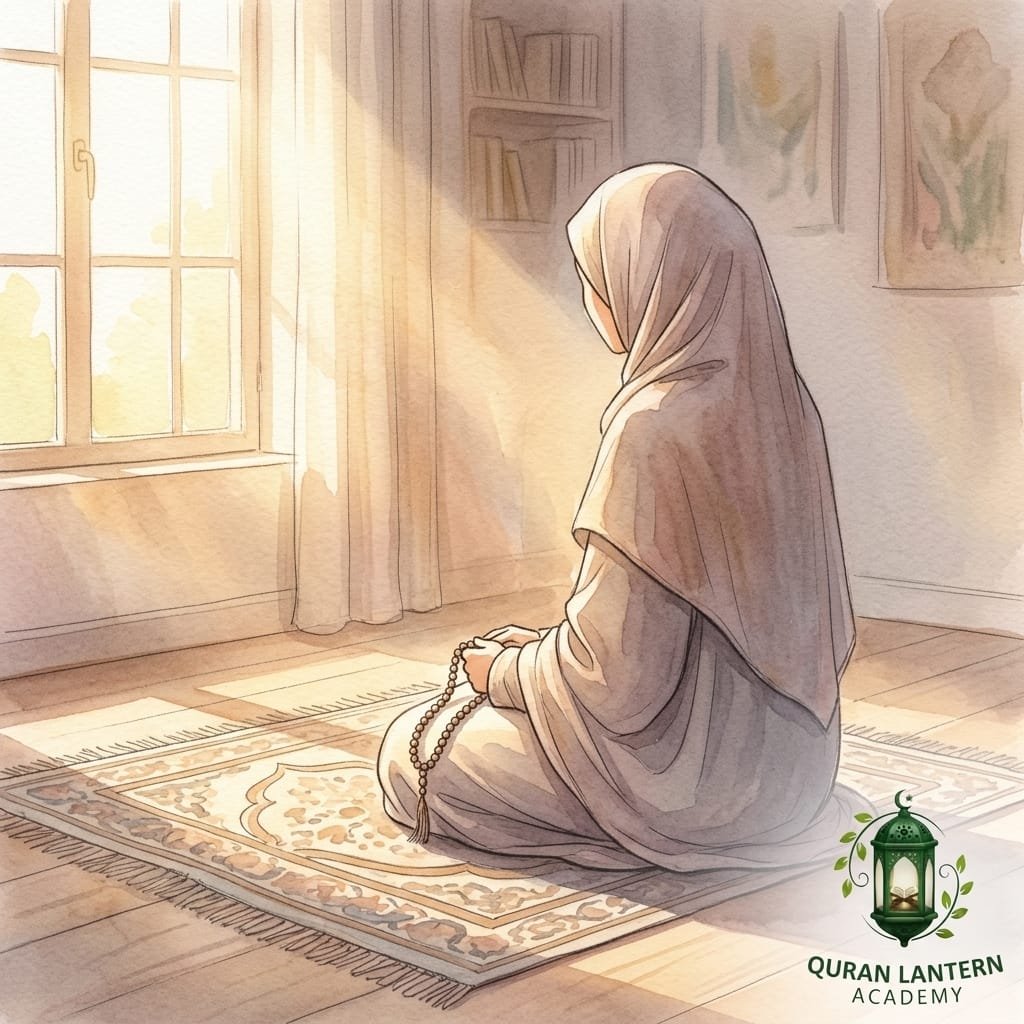

Welcome to the Heart of Your Daily Journey
Assalamu Alaikum (Peace be upon you), dear friend! Taking the monumental step to embrace Islam is a life-changing milestone, and we at Quran Lantern Academy are immensely proud to walk alongside you on this beautiful journey. As a new Muslim, or revert, you might find yourself navigating a brand-new world of traditions, terminology, and spiritual practices. Among all of these, one pillar stands out above the rest as the ultimate anchor of your day: Salah (Islamic ritual prayer).
If the thought of learning five prayers a day feels a bit overwhelming right now, take a deep breath. Allah (God) sees your sincere efforts, your struggles, and your love for Him. He does not demand perfection immediately; He cherishes progress and consistency. This guide is designed to gently hold your hand and help you introduce Salah into your daily life with confidence, peace, and joy.
What is Salah and Why Does It Matter?
In simple terms, Salah is your direct, personal appointment with the Creator of the universe five times a day. Unlike a rigid chore, think of Salah as a spiritual oasis in the middle of a busy desert. It is a chance to pause, drop your worldly burdens, and converse directly with the One who loves you more than anyone else ever could.
The Prophet Muhammad (peace and blessings be upon him) taught us that Salah is the coolness of the believer’s eyes. It is a moment of pure gratitude, an outlet for your deepest worries, and a sanctuary where your heart finally finds true rest. When you stand on the prayer rug, you are never alone.
The Five Daily Appointments
As a reminder, Muslims perform prayer at five specific times throughout the day and night:
- Fajr: The dawn prayer, prayed before sunrise.
- Dhuhr: The midday prayer, prayed after the sun passes its highest point.
- Asr: The late afternoon prayer.
- Maghrib: The sunset prayer, prayed right after the sun goes down.
- Isha: The night prayer, prayed in the darkness of the evening.
Overcoming the Fear of ‘Doing It Wrong’
One of the most common hurdles new Muslims face is the fear of making mistakes. You might worry about forgetting the Arabic words, mixing up the physical movements, or losing your focus. Please remember this comforting narration (Hadith): When someone stumbles in their recitation or struggles to learn the prayer, but tries their absolute best, they actually get double the reward—one for the prayer itself, and one for the struggle of trying!
Allah looks at your heart and your sincere intention (niyyah). If you can only remember a few words, or if you need to read from a piece of paper or a mobile phone while you pray, that is completely okay. You are a learner, and learning is a beautiful act of worship in itself.
Step-by-Step: Preparing for Your Prayer
Before you begin your conversation with Allah, a few physical and spiritual preparations take place:
- Purity (Wudu): Perform ritual ablution by washing your hands, mouth, nose, face, arms, wiping your head, and washing your feet with water. This cleanses you physically and mentally.
- Modest Clothing: Wear loose, clean clothing that covers your ‘awrah (the parts of the body that must be covered in front of others according to Islamic guidelines).
- Clean Space: Find a quiet, clean spot in your home and roll out a prayer rug (sajadah), or simply use a clean patch of floor.
- Facing the Qibla: Face the direction of the Kaaba in Mecca. If you are unsure, many smartphone apps can help you find this direction instantly.
How to Apply This in Your Daily Life
Transitioning to praying five times a day is a marathon, not a sprint. Here are practical, gentle steps you can take starting today:
- Start with One or Two: If five prayers feel daunting, begin by consistently praying one or two each day, such as Maghrib and Fajr. Once those feel natural, gently add a third, and so on.
- Use Cheat Sheets and Apps: Do not hesitate to use visual aids. Place a printout of the prayer steps in front of you on the floor, or use apps designed specifically for new Muslims that audio-assist your learning.
- Set Gentle Reminders: Use smartphone alarms with peaceful notification sounds to remind you when prayer times enter. Give yourself a 10-minute window to wind down before praying.
- Make Dua (Supplication): After you finish the structured movements of Salah, sit quietly and talk to Allah in your own native language. Pour out your dreams, fears, and gratitude. This personal connection will make you fall in love with prayer.
Conclusion
Embracing Salah is one of the most rewarding steps of your reversion journey. Be gentle with yourself, celebrate every small victory, and never hesitate to reach out for support when you need it. Here at Quran Lantern Academy, we are dedicated to providing you with clear, compassionate, and authentic guidance every single step of the way. May Allah make your prayers a source of infinite peace, light, and joy in your daily life. Ameen!