Welcome to Your Beautiful Journey of Prayer
Assalamu Alaikum (Peace be upon you), dear friend! Taking the step to embrace Islam is a life-changing moment filled with light and purpose. Now that you have started this incredible journey, one of the most common and important questions on your mind is undoubtedly: how to pray in islam? You might feel a little overwhelmed by the movements, the Arabic words, and the daily schedule. Please take a deep breath and know that you are not alone.
At Quran Lantern Academy, we want you to know that Allah (God) sees your sincere efforts. He loves the steps you are taking toward Him. The Islamic prayer, known as Salah, is not meant to be a stressful test or a heavy burden. Instead, it is a magnificent gift—a direct line of communication between your heart and your Creator five times a day.
Understanding the Basics: What is Salah?
Before diving into the physical steps of how to pray in islam, it helps to understand what prayer actually is. In Islam, Salah is a physical, mental, and spiritual act of worship. It consists of specific bodily postures—standing, bowing, prostrating, and sitting—accompanied by specific phrases of praise and supplication to Allah.
There are five mandatory prayers spread throughout the day:
- Fajr: The dawn prayer, prayed before sunrise.
- Dhuhr: The midday prayer, prayed after the sun passes its peak.
- Asr: The late afternoon prayer.
- Maghrib: The sunset prayer, prayed just after the sun goes down.
- Isha: The night prayer, prayed in the darkness of night.
Each prayer takes only about 5 to 10 minutes. Think of them as peaceful pauses in your busy day to recharge your soul, seek forgiveness, and find inner peace.
Preparation: Purity Before Prayer
Before you begin your conversation with Allah, your body and environment need to be clean. This preparation has two main parts:
- Wudu (Ablution): A ritual washing of specific body parts (hands, mouth, face, arms, head, and feet) using clean water. This purifies you physically and mentally, signaling a fresh start for your prayer.
- Clean Space and Clothing: Ensure your clothes and the place where you are praying (usually a clean rug or mat) are free from any physical impurities. Dress in modest clothing that covers your body properly.
Step-by-Step: How to Pray in Islam
Every prayer is made up of units called Rakats (cycles). For example, the Fajr prayer has 2 Rakats, while Maghrib has 3, and Dhuhr, Asr, and Isha have 4. Here is a simple, step-by-step breakdown of how a single Rakat is performed:
1. The Intention (Niyyah) and Opening Declaration
Stand facing the direction of the Kaaba in Mecca (the Qiblah). You do not need to say your intention out loud; simply know in your heart which prayer you are about to perform. Raise your hands to your shoulders or ears and say: “Allahu Akbar” (God is the Greatest). This is called the Takbirat al-Ihram, and it marks the beginning of your sacred time.
2. Standing and Reciting
Place your right hand over your left hand on your chest or upper stomach. Look down at the spot where your head will touch the floor during prostration. Recite the opening chapter of the Quran, known as Surah Al-Fatihah. If you are brand new and still learning Arabic, do not panic! You can recite it in English translation for now, or simply say “SubhanAllah” (Glory be to Allah) while you learn.
3. Bowing (Rukuh)
Say “Allahu Akbar” and bow forward from your hips, keeping your back straight and placing your hands on your knees. While in this position of humility, gently say: “Subhana Rabbiyal Azeem” (Glory be to my Lord, the Greatest) three times.
4. Rising from the Bow
Stand back up straight, raising your hands slightly, and say: “Sami-Allahu liman hamidah” (Allah hears the one who praises Him), followed by “Rabbana wa lakal hamd” (Our Lord, and to You belongs all praise).
5. Prostration (Sujud) – The Closest You Are to Allah
Say “Allahu Akbar” and gently lower yourself to the floor. This is the most beautiful part of the prayer! Seven parts of your body must touch the ground: your forehead and nose, both palms, both knees, and the toes of both feet. In this posture of ultimate surrender, whisper: “Subhana Rabbiyal A’la” (Glory be to my Lord, the Most High) three times.
6. Sitting Briefly and Second Prostration
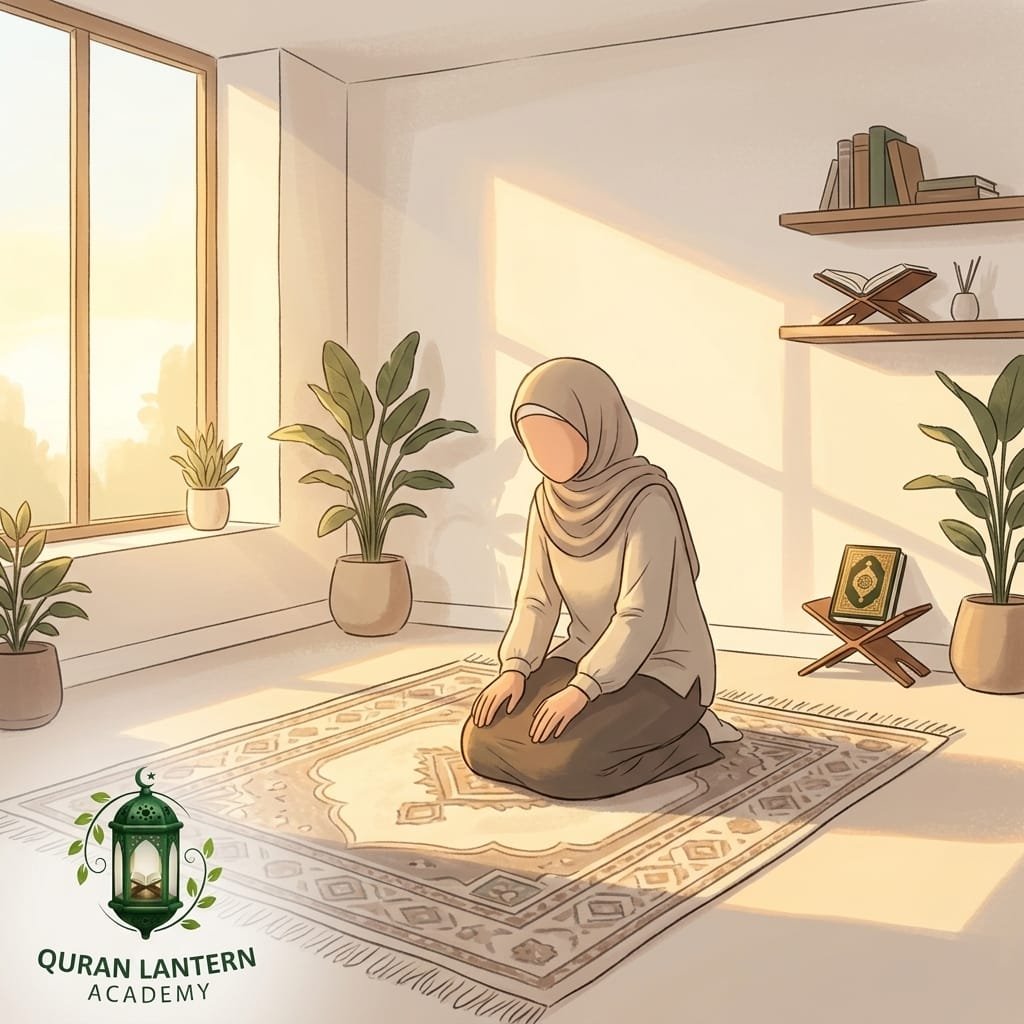
Sit up on your heels for a brief moment, saying “Allahu Akbar,” and then perform a second prostration (Sujud) exactly like the first one. This completes one full Rakat (cycle)!
How to Apply This in Your Daily Life
Learning how to pray in islam is a marathon, not a sprint. To avoid feeling overwhelmed, try applying these practical tips in your daily routine:
- Take it One Step at a Time: If learning all five prayers at once feels heavy, start with just one or two prayers a day, and gradually build up to all five.
- Use a Cheat Sheet: Keep a piece of paper or a mobile app with the transliteration and English translations nearby while you pray. Allah knows your struggle and values your effort.
- Be Patient with Yourself: Mistakes happen. If you forget a step or lose your balance, simply correct yourself and keep going. Perfection is not expected; sincerity is.
- Connect with a Community: Surround yourself with supportive mentors and fellow believers who can guide you with love and patience.
Conclusion
Mastering how to pray in islam is one of the most rewarding milestones of your revert journey. Every stumble, every mispronounced word, and every tear shed on your prayer mat is deeply cherished by Allah. Be gentle with yourself, celebrate your small victories, and remember that you never have to walk this path alone. Here at Quran Lantern Academy, we are committed to lighting your way with knowledge, compassion, and authentic guidance. May Allah accept your prayers and fill your heart with ultimate peace.