Welcome to Your Journey of Prayer
Assalamu alaikum (Peace be upon you), dear friend! Taking the step to embrace Islam is a life-changing moment, and we are so proud and happy to walk beside you on this beautiful journey. One of the very first and most important questions new Muslims ask is: how to pray in islam?
If you are feeling a bit overwhelmed, take a deep breath and let your heart settle. Learning how to pray—known in Arabic as Salah—is not about perfection overnight. It is a process of building a direct, beautiful conversation with your Creator, Allah. At Quran Lantern Academy, we want to make this learning process as gentle, stress-free, and joyful as possible for you.
Understanding the Heart of Salah
Before diving into the physical movements, let’s talk about what prayer actually means. In Islam, prayer is not a burdensome chore; it is a sacred gift. Five times a day, you are invited to pause whatever you are doing, disconnect from the noisy world, and stand before the One who loves you more than anyone else. It is your personal sanctuary, your moment of peace, and your direct line to Allah.
The Five Daily Prayers
Muslims pray five times throughout the day and night. Think of them as spiritual pit stops to recharge your soul:
- Fajr: The dawn prayer, prayed before sunrise.
- Dhuhr: The midday prayer, prayed after the sun passes its peak.
- Asr: The late afternoon prayer.
- Maghrib: The sunset prayer, prayed just after the sun goes down.
- Isha: The night prayer, prayed in the darkness of night.
Each prayer takes only about 5 to 10 minutes. Don’t worry about memorizing all five right away. Take it one step at a time!
Step-by-Step: How to Pray in Islam
Learning how to pray in islam involves a combination of physical postures, inner focus, and verbal recitations. Let us break it down into easy, manageable steps:
Step 1: Purity and Preparation (Wudu)
Before you pray, you must perform a ritual washing called Wudu (ablution). This involves washing your hands, mouth, nose, face, arms, wiping your head and ears, and washing your feet with clean water. Wudu refreshes your body and prepares your mind to stand before Allah in a state of cleanliness.
Step 2: Covering and Direction (Qiblah)
Ensure you are dressed in clean, modest clothing that covers your body appropriately. You also need to face the direction of the Kaaba (the sacred cube in Makkah, Saudi Arabia), known as the Qiblah. Today, you can easily use smartphone compass apps to find the Qiblah from anywhere in the world.
Step 3: The Intention (Niyyah)
Stand upright on a clean surface or prayer mat. You do not need to say your intention out loud; simply anchor your heart in the knowledge of which prayer you are about to perform (for example, intentionally preparing to pray Fajr).
Step 4: The Opening Declaration (Takbir)
Raise your hands to your ears or shoulders and say: “Allahu Akbar” (Allah is the Greatest). This marks the beginning of your sacred conversation, shutting out the rest of the worldly distractions.
Step 5: Standing and Reciting
Place your right hand over your left hand on your chest or upper stomach. You will softly recite the opening chapter of the Quran, known as Surah Al-Fatihah. If you are a complete beginner and haven’t memorized Arabic yet, don’t panic! You can recite translations or simply praise Allah in your native language in your heart while you learn, or repeat simple phrases like SubhanAllah (Glory be to Allah).
Step 6: Bowing (Ruku)
Bow from your waist, keeping your back straight, and place your hands on your knees. While in this position, softly say three times: “Subhana Rabbiyal Adheem” (Glory be to my Lord, the Most Great).
Step 7: Rising and Prostrating (Sajdah)
Stand back up straight for a brief moment, saying “Samiallahu liman hamidah” (Allah hears the one who praises Him), followed by “Rabbana wa lakal hamd” (Our Lord, to You belongs all praise).
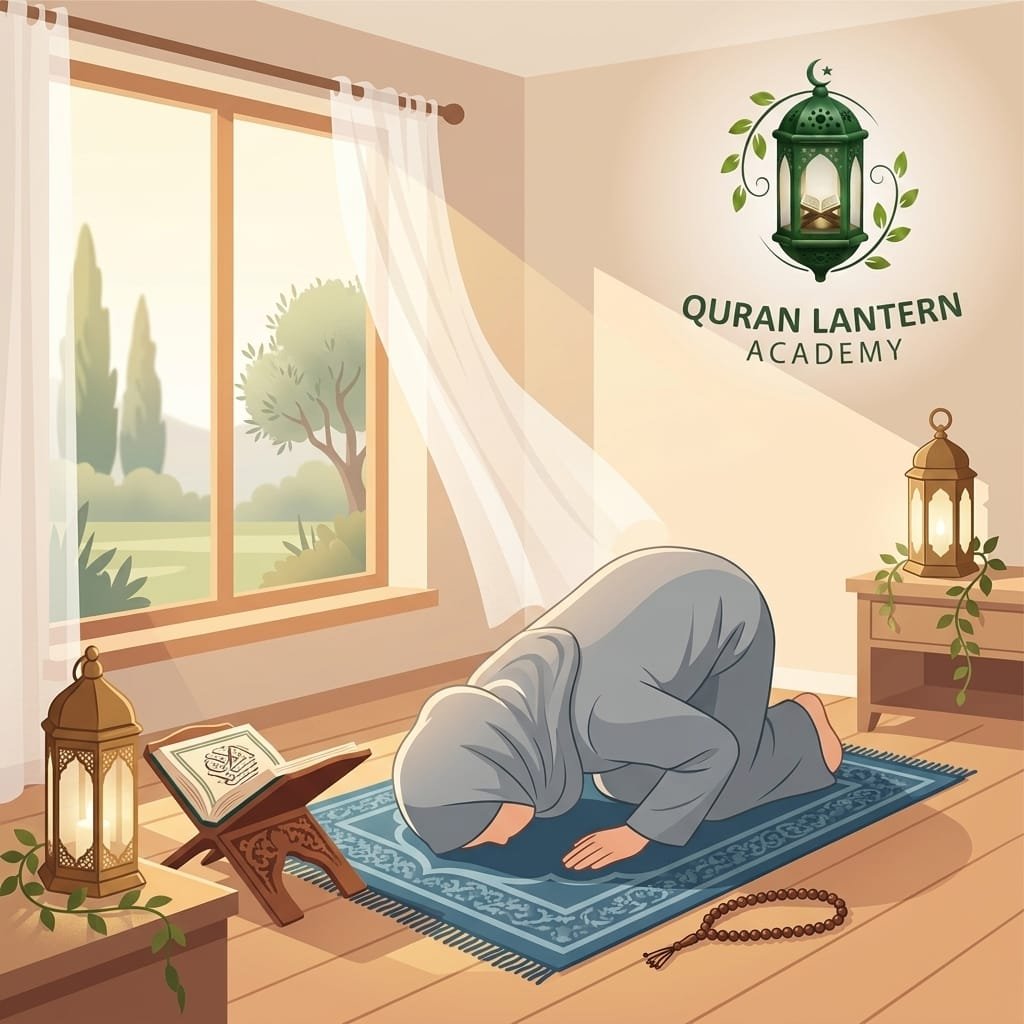
Then, gently lower yourself into prostration (Sajdah). This is the most beloved posture in prayer, where your forehead, nose, palms, knees, and toes touch the ground. You are closer to Allah here than at any other time! While in prostration, say three times: “Subhana Rabbiyal A’la” (Glory be to my Lord, the Most High).
Step 8: Sitting and the Final Salutation
You will rise from prostration, sit briefly on your heels, and then perform a second prostration. A sequence of standing, bowing, and two prostrations is called a Rak’ah (unit of prayer). Depending on the prayer, you will have 2, 3, or 4 units. At the very end of your prayer, you sit and offer greetings of peace by turning your head to the right saying “Assalamu alaykum wa rahmatullah”, and then to the left doing the same.
How to Apply This in Your Daily Life
Mastering how to pray in islam is a gradual journey, and patience is your best companion. Here are some practical tips to help you apply this daily without burning out:
- Take it One Prayer at a Time: Don’t try to start all five prayers on day one if it feels overwhelming. Maybe start with one or two daily prayers until you feel comfortable.
- Use Cheat Sheets: It is completely normal to hold a piece of paper or place a phone on a stand in front of you with the transliteration and translation while you pray. Allah sees your sincere effort!
- Be Gentle with Yourself: Mistakes happen. If you lose your count or forget a step, simply continue or make a polite prostration of forgetfulness later. Perfection is not expected; sincerity is.
- Establish a Routine: Tie your prayer times to natural daily markers, like waking up, lunch breaks, or coming home from work.
Conclusion
Learning how to pray in islam is one of the most rewarding milestones of your new life of faith. Remember that every stumble, every mispronounced word, and every moment of confusion is seen and deeply appreciated by a Loving Creator who values your sincere efforts above all else. You are never alone on this path. At Quran Lantern Academy, we are dedicated to providing you with the guidance, community, and resources you need to thrive. May Allah bless your journey, ease your learning, and fill your heart with the profound peace of Salah!