Welcome to Your New Spiritual Journey
Assalamu Alaikum (Peace be upon you), dear friend! Taking the step to embrace Islam is one of the most beautiful and courageous decisions you will ever make. As a new Muslim, or revert, you might feel a mix of overwhelming joy and a slight nervousness about learning all the new practices. That is completely normal. Take a deep breath and know that Allah sees your sincere effort.
One of the most frequently asked questions we receive at Quran Lantern Academy is simply: how to pray in islam? You might worry about memorizing the Arabic words or getting the physical movements right. Please remember this golden rule: Allah loves your sincere attempt more than flawless execution. He looks at your heart. In this guide, we will break down how to pray in islam step-by-step, making it easy, accessible, and stress-free for you.
Understanding the Daily Prayers (Salah)
Before diving into the physical actions, it helps to understand the bigger picture. In Islam, prayer is known as Salah. It is not just a chore or an obligation to check off a daily list; rather, it is a direct, beautiful conversation between you and your Creator. Muslims perform Salah five times a day:
- Fajr: The dawn prayer
- Dhuhr: The midday prayer
- Asr: The afternoon prayer
- Maghrib: The sunset prayer
- Isha: The night prayer
Each prayer takes only about 5 to 10 minutes. Think of them as five peaceful oases scattered throughout your busy day, giving you a chance to pause, recharge, and seek guidance from Allah.
Preparation: Getting Ready for Prayer
Before you begin learning how to pray in islam, you need to prepare your body and your environment. Cleanliness is a huge part of the Islamic faith.
1. Wudu (Ablution)
Before praying, you must perform a ritual washing called Wudu. This involves washing your hands, rinsing your mouth and nose, washing your face, washing your arms up to the elbows, wiping your head, and finally washing your feet. It refreshes both the body and the mind.
2. Clothing and Space
Wear clean, modest clothing that covers your body properly (for men, from the navel to the knees; for women, the entire body except the face and hands). Find a clean, quiet space and lay down a prayer mat, ensuring you are facing the direction of the Kaaba in Makkah (known as the Qibla).
Step-by-Step: How to Pray in Islam
A complete prayer is made up of units called Rakats. Different prayers have different numbers of Rakats. For beginners learning how to pray in islam, let’s look at the basic physical movements and recitations of a single Rakat.
Step 1: The Intention (Niyyah) and Opening Takbir
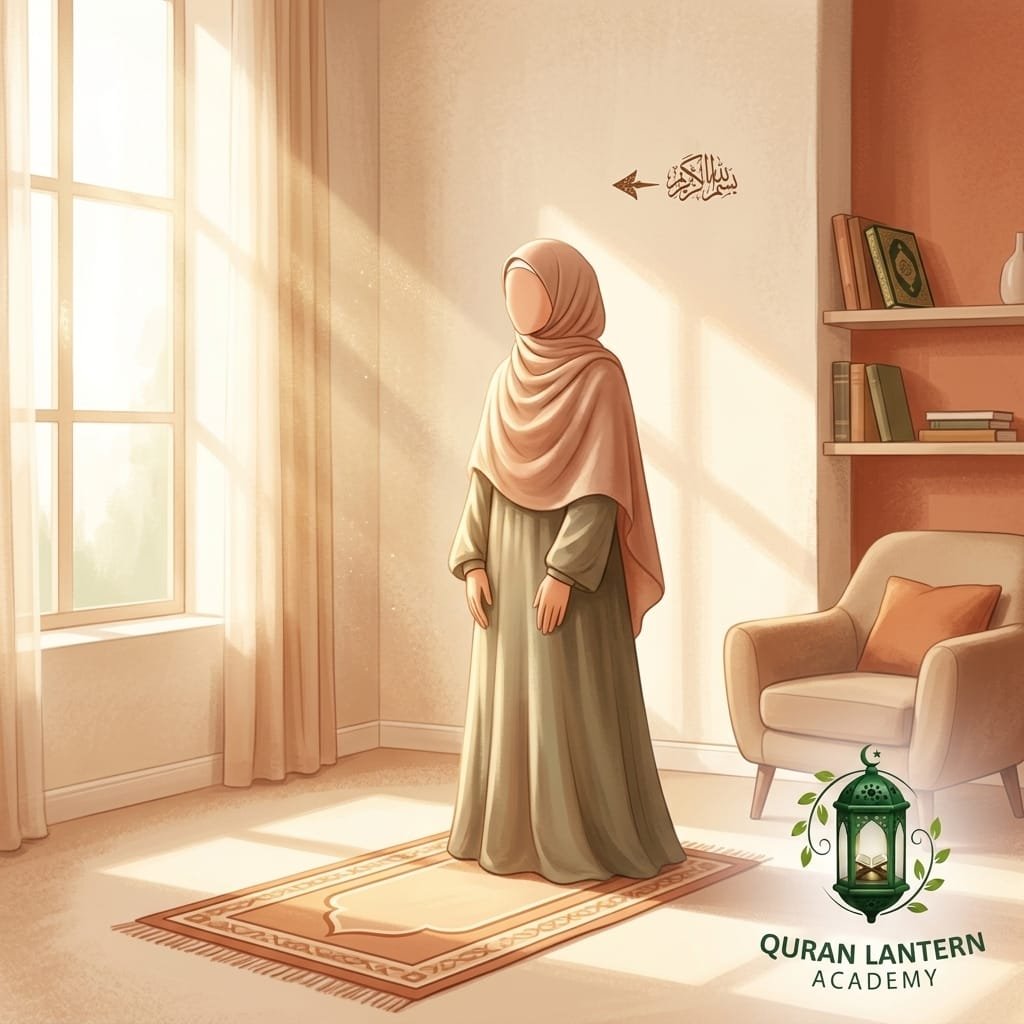
Stand straight, facing the Qibla. You don’t need to say your intention out loud; simply know in your heart which prayer you are about to perform. Raise your hands to your ears (or shoulders) and say: “Allahu Akbar” (God is the Greatest). This marks the beginning of your sacred conversation.
Step 2: Standing and Reciting
Place your right hand over your left hand on your chest or upper stomach. If you are a beginner, you can quietly recite what you know. Recite Surah Al-Fatihah (the opening chapter of the Quran) or, if you are still learning, simply whisper praises to Allah like “SubhanAllah” (Glory be to Allah) and “Alhamdulillah” (Praise be to Allah). Allah knows your exact capability.
Step 3: Bowing (Ruku)
Say “Allahu Akbar” again and bow forward from your hips, keeping your back straight and placing your hands on your knees. While in this position of humility, gently say: “Subhana Rabbiyal Azeem” (Glory be to my Lord, the Greatest) three times.
Step 4: Standing Back Up
Rise back up to a standing position, saying: “Sami’Allahu liman hamidah” (Allah hears whoever praises Him), followed by “Rabbana wa lakal hamd” (Our Lord, to You belongs all praise).
Step 5: Prostration (Sujud)
This is the most beloved part of the prayer, where you are closest to Allah. Say “Allahu Akbar” and lower yourself to the floor. Seven parts of your body should touch the ground: your forehead and nose, both hands, both knees, and the toes of both feet. While in prostration, say: “Subhana Rabbiyal A’la” (Glory be to my Lord, the Most High) three times. Pour your heart out to Allah here; you can even make personal supplications in your own language.
Step 6: Sitting and the Conclusion
Sit back briefly on your heels, then go down for a second prostration just like the first one. After the second prostration, you either stand up for the next Rakat or sit to finish your prayer with the final greetings of peace, turning your head to the right and then the left, saying: “Assalamu alaykum wa rahmatullah” (Peace be upon you and the mercy of Allah).
How to Apply This in Your Daily Life
Learning how to pray in islam is a journey, not a race. Here is how you can practically integrate this into your daily routine without feeling overwhelmed:
- Take it one step at a time: If praying all five prayers feels daunting, start with one or two a day and gradually build up.
- Use cheat sheets: Don’t hesitate to place a piece of paper or your phone with the translations and transliterations in front of you while you pray. Islam is accommodating to learners.
- Be patient with your memory: The Arabic phrases will eventually become second nature. Celebrate small victories, like learning a new line of a prayer.
- Find a supportive community: Surround yourself with mentors and fellow believers who encourage you gently.
Conclusion
Embracing a new lifestyle is a profound blessing, and mastering how to pray in islam will anchor your days in peace and divine connection. Remember that Allah values your sincere effort, your stumbles, and your tears of devotion far more than mechanical perfection. At Quran Lantern Academy, we are dedicated to walking this beautiful path with you, offering resources, compassionate guidance, and a supportive community. May Allah make your journey easy, accept your prayers, and fill your heart with everlasting light. Ameen!