Welcome to Your Spiritual Journey
Assalamu Alaikum (Peace be upon you), dear friend! Taking the step to embrace Islam is a life-changing milestone, and we are so proud and overjoyed to welcome you to the global family of believers. If you are feeling a little overwhelmed right now, take a deep breath. You are not alone, and Allah (God) sees every single sincere effort you are making.
One of the most common questions new believers ask is: “How to pray in Islam?” It is completely normal to feel nervous about memorizing new words and physical movements. But remember, Islam is a religion of ease, not hardship. Allah loves your honest attempts, even if your pronunciation isn’t perfect yet. In this comprehensive guide, we will break down how to pray in islam into simple, digestible steps designed specifically for you.
Understanding the Daily Prayers (Salah)
In Islam, prayer is known as Salah. It is not just a chore or a physical routine; it is a direct, beautiful conversation between you and your Creator. Imagine having a VIP pass to speak directly to the King of the universe five times a day—that is what Salah is!
Muslims perform five mandatory prayers every single day. They are spread out from dawn until night:
- Fajr: The dawn prayer (before sunrise)
- Dhuhr: The midday prayer
- Asr: The afternoon prayer
- Maghrib: The sunset prayer
- Isha: The night prayer
Each prayer takes only about 5 to 10 minutes. Think of them as spiritual pitstops to recharge your peace, seek forgiveness, and ask for guidance.
Step-by-Step: How to Pray in Islam
Before you begin learning how to pray in islam physically, there are two important preparations: ensuring you are in a state of ritual purity (through Wudu, or ritual washing) and wearing clean, modest clothing.
Step 1: The Intention (Niyyah) and Standing
Face the direction of the Kaaba in Makkah (known as the Qibla). You don’t need to say your intention out loud in Arabic; simply knowing in your heart which prayer you are about to perform is enough. Stand upright, focusing your mind and eyes on the spot where you will place your head in prostration.
Step 2: The Opening Declaration (Takbeer)
Raise your hands beside your shoulders or ears and say: “Allahu Akbar” (God is the Greatest). This marks the beginning of your sacred conversation with Allah. From this moment on, try to quiet your worldly thoughts.
Step 3: Reciting the Opening Chapter
Place your right hand over your left hand on your chest or upper stomach. You will recite the opening chapter of the Quran, called Surah Al-Fatihah. If you haven’t memorized it yet, don’t worry! You can recite a simple phrase like “Subhanallah” (Glory be to Allah) or listen to an audio guide while you learn.
Surah Al-Fatihah translates beautifully to:
“In the name of Allah, the Entirely Merciful, the Especially Merciful. All praise is due to Allah, Lord of the worlds… Guide us to the straight path.”
Step 4: Bowing (Ruku)
Say “Allahu Akbar” again and bow forward at the waist, placing your hands on your knees. Keep your back straight and gently say three times: “Subhana Rabbiyal Azeem” (Glory be to my Lord, the Greatest).
Step 5: Standing Up Straight
Rise back up to a standing position, saying: “Sami Allahu liman hamidah” (Allah hears the one who praises Him), followed by “Rabbana wa lakal hamd” (Our Lord, to You belongs all praise).
Step 6: Prostration (Sujud) – The Closest You Are to Allah
This is the most beautiful part of learning how to pray in islam. Say “Allahu Akbar” and gently lower yourself to the floor. Seven parts of your body must touch the ground: your forehead and nose, both hands, both knees, and the toes of both feet.
While in this position of ultimate humility, whisper three times: “Subhana Rabbiyal A’la” (Glory be to my Lord, the Most High). Know that the Prophet Muhammad (peace be upon him) taught us that a servant is closest to their Lord while in prostration. Pour your heart out here; you can even make silent personal supplications in your own language!
Step 7: Sitting and Finishing (Tashahhud and Tasleem)
After completing two prostrations, you will briefly sit up on your heels, then go down for a second prostration. Depending on which prayer unit (Rak’ah) you are on, you will eventually sit to recite the final testimony of faith (Tashahhud). Finally, conclude your prayer by turning your face to the right and saying “Assalamu alaykum wa rahmatullah” (Peace be upon you and the mercy of Allah), and repeating it to the left.
How to Apply This in Your Daily Life
Learning how to pray in islam is a journey, not a sprint. Here is how you can practically integrate this into your busy routine without burning out:
- Take it One Step at a Time: If learning all five prayers feels daunting, start with just one or two a day until you build confidence. Allah values consistency over quantity.
- Use Visual Aids and Apps: Print out a cheat sheet of the prayer steps or use a smartphone app designed for new Muslims that plays audio cues alongside the movements.
- Be Gentle with Yourself: It is completely normal to forget which step you are on or stumble over Arabic words. Just keep going. The Prophet (peace be upon him) promised that those who struggle to recite the Quran or pray will receive a double reward for their sincere effort!
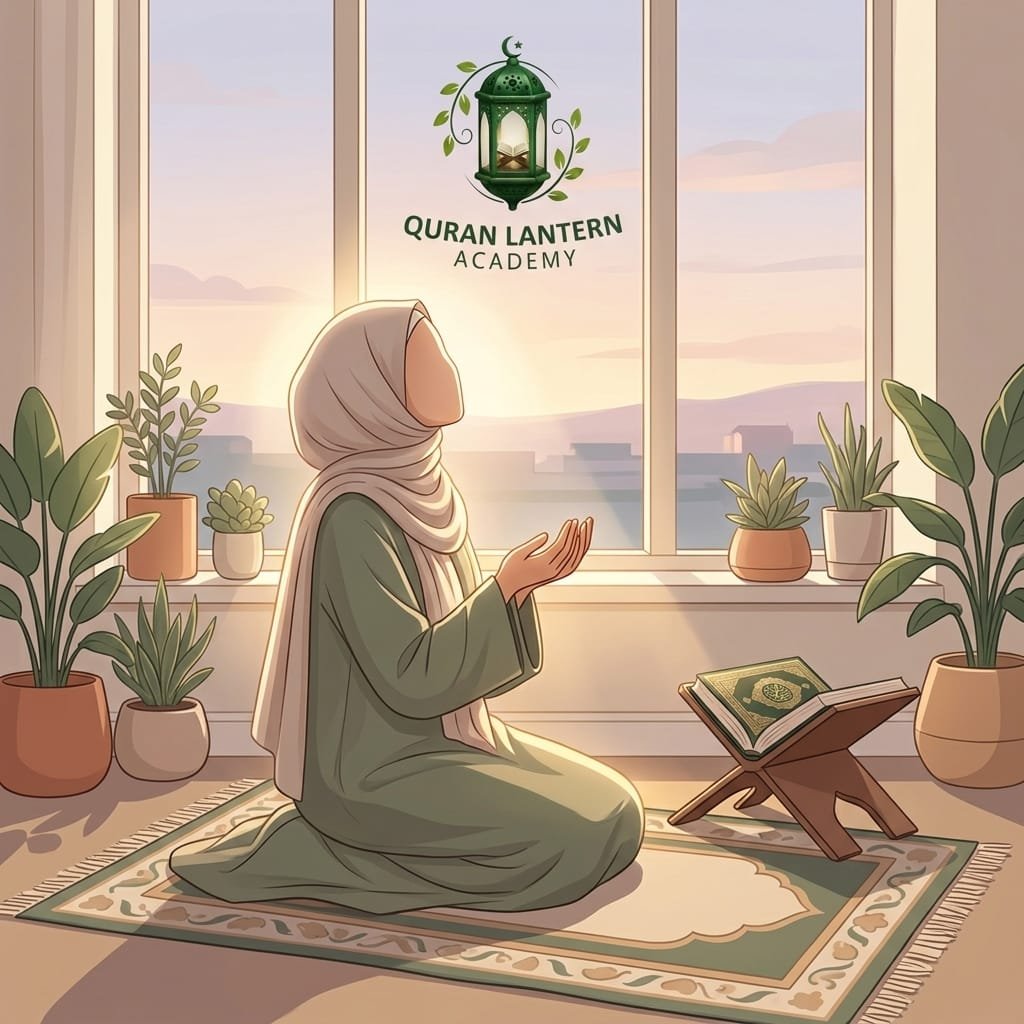
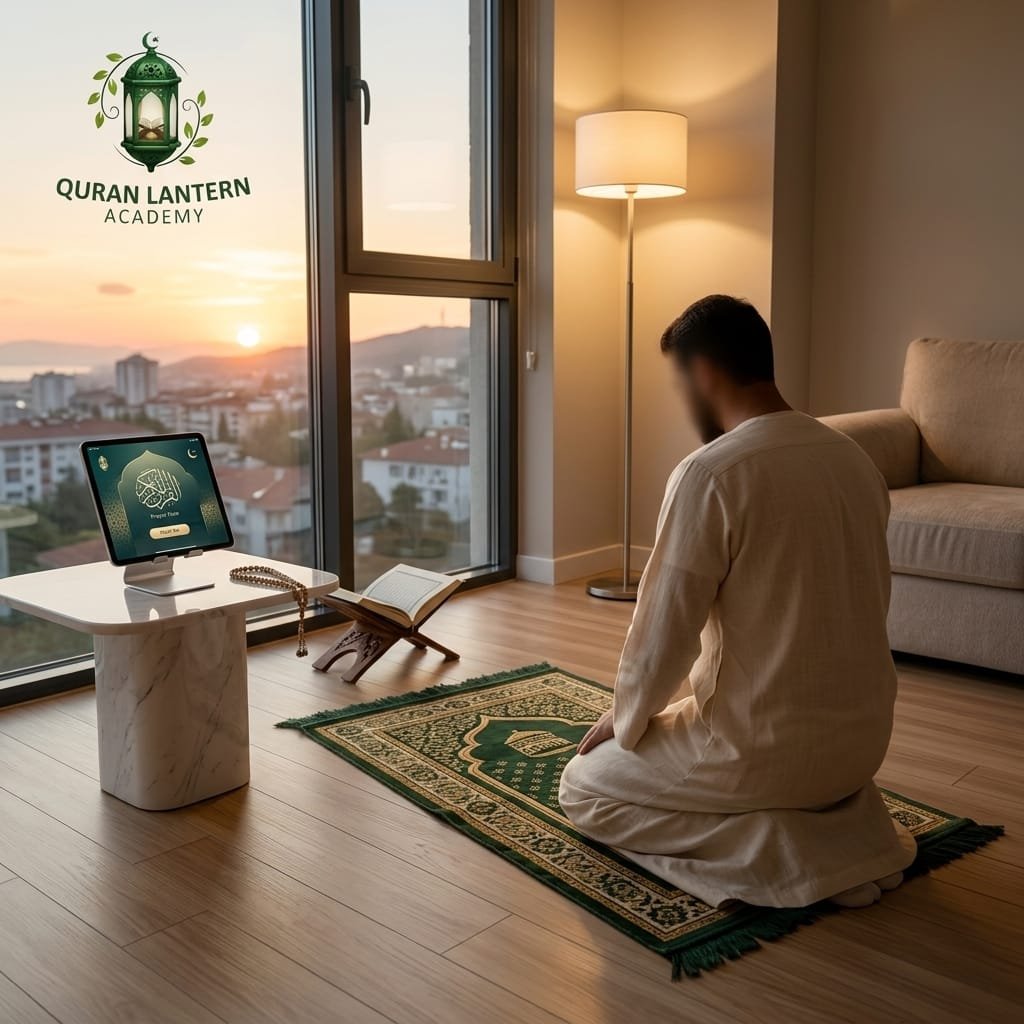
- Create a Dedicated Space: Set up a quiet, clean corner in your home with your prayer mat. Having a designated sacred space makes the habit much easier to maintain.
Conclusion
Embracing a new lifestyle is a courageous endeavor, and mastering how to pray in islam is one of the most rewarding milestones of your faith. Remember that you do not need to be perfect from day one; your sincerity, love for Allah, and willingness to learn are what truly matter. At Quran Lantern Academy, we are honored to walk beside you on this blessed path. If you ever have questions, need personalized support, or want to dive deeper into learning the Quran, explore our beginner-friendly courses tailored specifically for new reverts. May Allah make your journey easy, fill your heart with peace, and accept your prayers. Ameen!