
Welcome, Dear Friend, to a Journey Through Time
Assalamu Alaikum (Peace be upon you), dear brother or sister! If you are new to Islam, welcome to a community that spans the globe and stretches back over 1,400 years. Embracing Islam is one of the most beautiful and courageous decisions you will ever make. However, as you may have already noticed, walking this path is not always easy. Sometimes, life throws heavy tests our way—doubt, family misunderstandings, financial struggles, or loneliness.
When these moments hit, it is completely normal to feel overwhelmed. But you are never alone. Today, we want to take you back in time to one of the most poignant moments in Islamic history: The Year of Sorrow (Aam al-Huzn). By looking at how our beloved Prophet Muhammad (peace and blessings be upon him) navigated his darkest days, we pray you will find immense comfort, resilience, and hope for your own daily life.
What Was the Year of Sorrow?
To understand this powerful chapter in Islamic history, we have to look at the life of Prophet Muhammad (PBUH) in Makkah. For ten grueling years, he and the early Muslim community faced fierce persecution, boycotts, and abuse from the ruling pagan tribe.
Despite this hostility, the Prophet had two massive rocks of emotional and physical support:
- Khadijah (may Allah be pleased with her): His devoted wife of 25 years, his confidante, and the very first person to believe in his mission.
- Abu Talib: His uncle, who protected him from the physical violence of the tribal leaders, even though Abu Talib never accepted Islam himself.
Then came the tenth year of prophethood. Within a very short span of just a few weeks, both Khadijah and Abu Talib passed away. The Prophet (PBUH) lost his loving, comforting wife and his fearless protector at the exact same time. Compounding this personal grief, the leaders of Makkah ramped up their hostility, knowing the Prophet was now vulnerable. This painful year became eternally known in Islamic history as Aam al-Huzn—The Year of Sorrow.
The Deep Humanity of the Prophet (PBUH)
As new Muslims, it is vital to remember that our Prophet was human. He felt pain, he shed tears, and he grieved deeply. When his infant son Ibrahim passed away later in life, the Prophet wept openly, saying, “The eyes shed tears and the heart is grieved, but we will not say anything except what pleases our Lord.”
Islam does not ask you to suppress your sadness or pretend everything is fine when your heart is breaking. Grieving is a natural human state, and feeling overwhelmed does not mean your faith is weak. It simply means you have a beating heart.
How Allah Comforted His Messenger
When the Prophet (PBUH) hit rock bottom in Makkah, seeking a way to share the message of Islam elsewhere, he traveled to the nearby city of Ta’if. Instead of welcoming him, the leaders of Ta’if mocked him and incited the street youth to pelt him with stones until his shoes filled with his own blood.
Exhausted, bleeding, and heartbroken, he sat under a tree and made one of the most famous, tear-jerking supplications (du’a) in history, turning entirely to Allah: “O Allah, to You I complain of my weakness, my lack of resourcefulness, and my insignificance before humanity… If You are not angry with me, I do not care.”
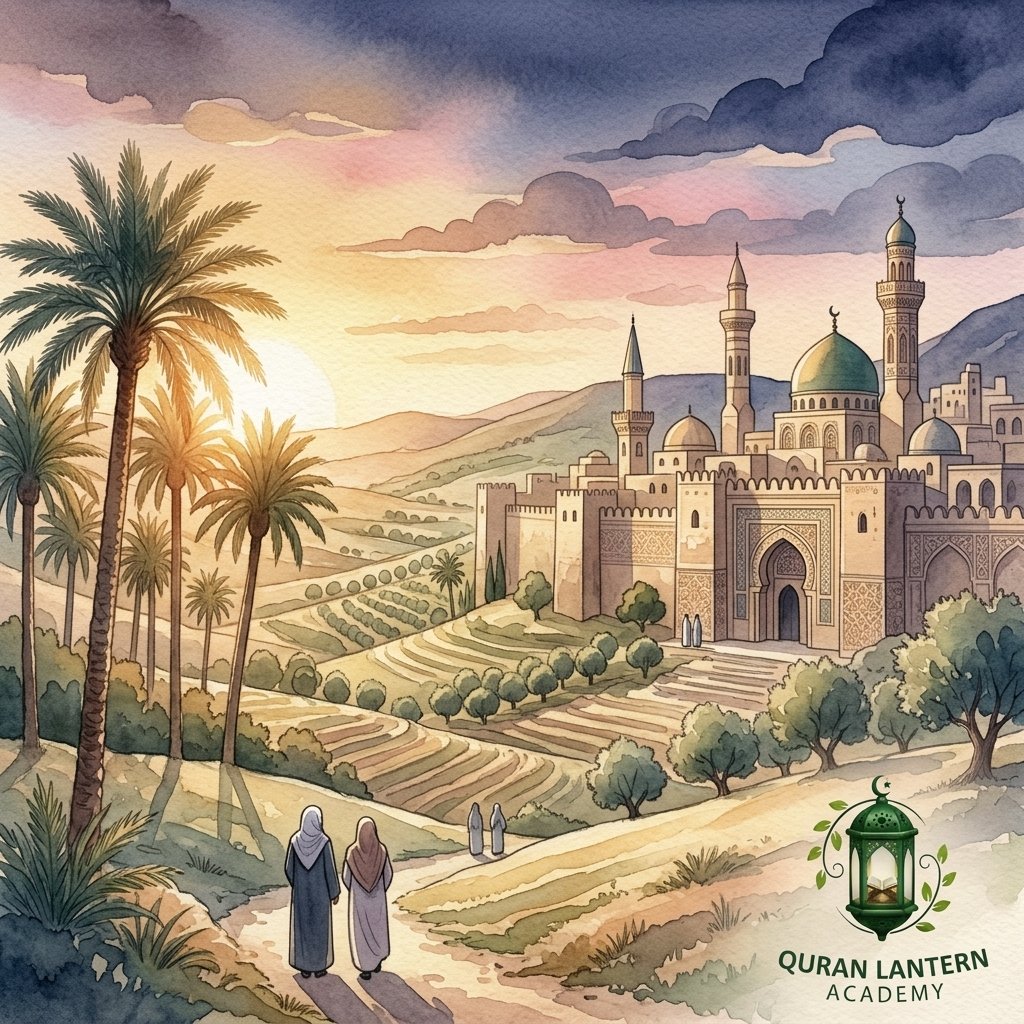
How did Allah respond to this immense grief? Shortly after, Allah blessed His Messenger with the miraculous Night Journey and Ascension (Al-Isra’ wal-Mi’raj). The Prophet was taken from Makkah to Jerusalem, and then up through the heavens to meet his Lord and receive the gift of daily prayer (Salah). It was a divine reminder that while earthly doors may close, the doors of the heavens are always wide open for those who turn to Allah.
How to Apply This in Your Daily Life as a New Muslim
History is not just a collection of old stories; it is a glowing map meant to guide us today. Here is how you can draw strength from the Year of Sorrow when you face your own trials:
- Allow Yourself to Feel: If you are struggling with your new lifestyle, feeling lonely, or missing family members who don’t understand your conversion, acknowledge the pain. Do not judge yourself for feeling sad.
- Turn Your Pain into Prayer: Just like the Prophet (PBUH) poured his heart out to Allah in Ta’if, make your prostrations (Sujud) your safe space. Speak to Allah in your own language, in your own words. He is closer to you than your jugular vein.
- Remember That Relief Follows Hardship: The Quran explicitly promises in Surah Ash-Sharh: “For indeed, with hardship [will be] ease. Indeed, with hardship [will be] ease.” (Quran 94:5-6). Notice that the verse says *with* hardship, not *after* hardship. Relief is woven right inside your struggle.
- Seek Out Your Support System: Khadijah and Abu Talib were physical supports for the Prophet. As a new Muslim, find your community. Surround yourself with supportive, kind-hearted believers who can uplift you when your faith feels heavy.
Conclusion: You Are Walking a Noble Path
Dear friend, trials are not a sign that Allah is unhappy with you; rather, they are often the polish that makes a believer’s heart shine brighter. The Prophet Muhammad (PBUH) survived the Year of Sorrow to eventually witness the triumphant spread of light, peace, and justice.
At Quran Lantern Academy, we are honored to walk beside you on this beautiful journey of faith, learning, and discovery. Whenever you feel heavy-hearted, remember that you are following in the footsteps of the greatest human to ever walk the earth. Take a deep breath, make a sincere du’a, and trust that easier, brighter days are ahead, by the grace of Allah.