
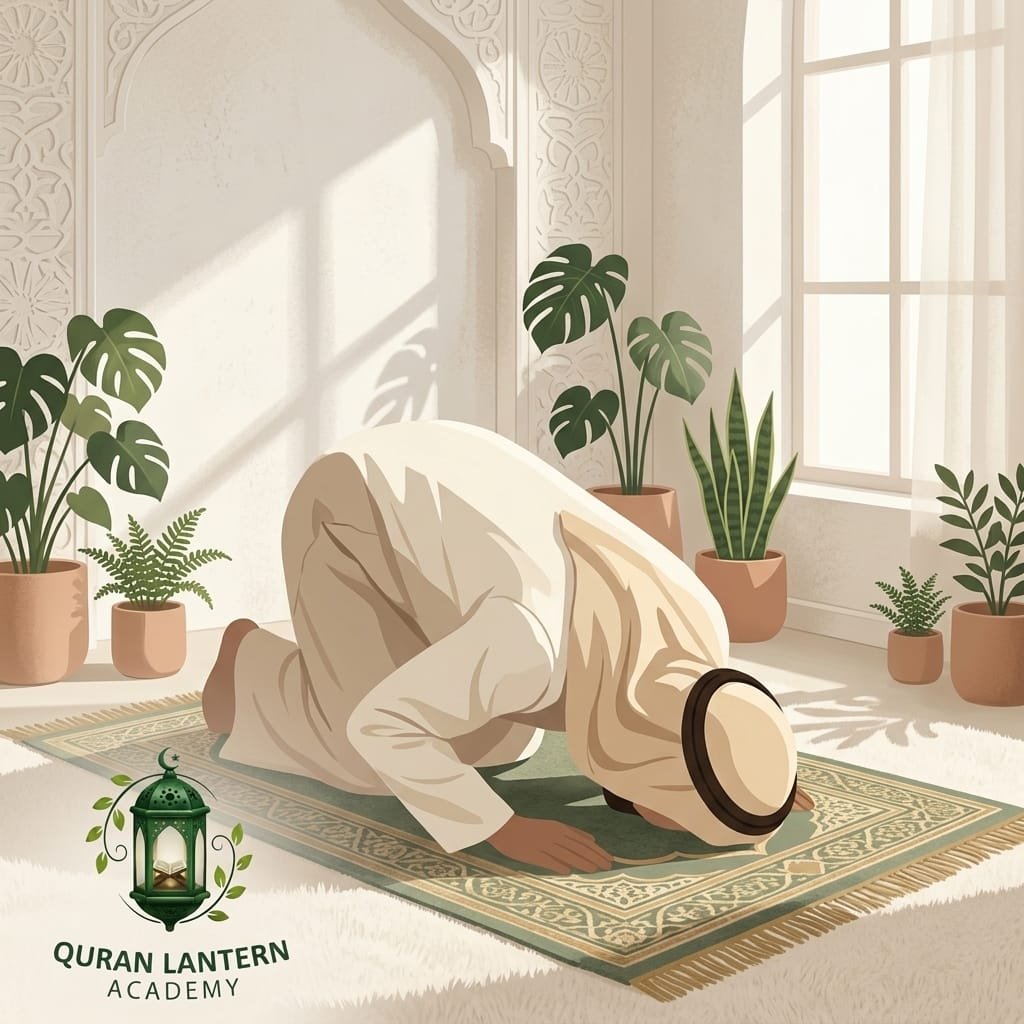
Welcome to the Heart of Islamic Worship
Assalamu Alaikum (Peace be upon you), dear friend! Taking the step to embrace Islam is a life-changing journey, and we want to warmly welcome you to the Quran Lantern Academy family. If you are a new Muslim (revert), you might sometimes feel overwhelmed by learning everything at once. Please take a deep breath and give yourself grace. Allah (God) knows your heart, and He sees every single effort you make to please Him.
One of the most beautiful gifts given to believers is Salah (the daily ritual prayer). Far from being a chore, Salah is a divine appointment—a daily reset button for your soul. It is your personal, direct conversation with the Creator of the universe. In this guide, we will walk through prayer step-by-step, gently and simply, so you can begin connecting with your Lord with confidence and peace.
What is Salah and Why Does It Matter?
Salah is performed five times a day. These specific times anchor our day, keeping us grounded in gratitude, mindfulness, and remembrance of Allah. The five daily prayers are:
- Fajr: The dawn prayer, prayed before sunrise.
- Dhuhr: The midday prayer, prayed after the sun passes its peak.
- Asr: The afternoon prayer.
- Maghrib: The sunset prayer.
- Isha: The night prayer.
Each prayer only takes a few minutes, but the spiritual benefits last all day. It is a moment to pause whatever is stressing you out, turn your face toward the Kaaba (the Sacred House in Makkah), and whisper your hopes, fears, and praises directly to Allah.
Preparing for Prayer: The Basics of Wudu
Before we stand in prayer, we must prepare our bodies and minds through purification, known as Wudu (ablution). Wudu is a physical and spiritual cleansing.
Simple Steps of Wudu:
- Make the intention in your heart to perform Wudu for Allah’s sake.
- Wash your hands completely three times.
- Rinse your mouth three times and rinse your nose three times.
- Wash your face three times.
- Wash your arms up to the elbows three times (starting with the right arm).
- Wipe your wet hands over your head and ears once.
- Wash your feet up to the ankles three times (starting with the right foot).
Note for beginners: Don’t worry if you don’t memorize every detail right away. Keep a simple checklist nearby until it becomes second nature!
The Structure of Prayer: Understanding Rakahs
Islamic prayers are made up of units called Rakahs. Each Rakah is a specific sequence of standing, bowing, and prostrating. Depending on the prayer time, the number of Rakahs changes (for example, Fajr is 2, Dhuhr is 4, Maghrib is 3).
Step-by-Step Through One Rakah:
- Standing (Qiyam): Stand facing the direction of prayer (Qiblah). Raise your hands to your ears and say “Allahu Akbar” (God is the Greatest). This starts your prayer.
- Recitation: Recite the opening chapter of the Quran, called Al-Fatihah (The Opening). If you are new and still learning it, don’t worry! You can recite what you know, or simply remember Allah in your heart, while you practice learning Al-Fatihah little by little.
- Bowing (Ruku): Bow forward from the waist, placing your hands on your knees, and say quietly, “Subhana Rabbiyal Azeem” (Glory be to my Lord, the Greatest) three times.
- Rising: Stand back up straight, saying, “Sami Allahu liman hamidah” (Allah hears the one who praises Him), followed by “Rabbana wa lakal hamd” (Our Lord, to You belongs all praise).
- Prostration (Sujud): This is the most beloved position in prayer. Lower yourself to the floor so that your forehead, nose, palms, knees, and toes touch the ground. You are now physically closer to Allah than at any other time. Whisper “Subhana Rabbiyal A’la” (Glory be to my Lord, the Most High) three times.
- Sitting and Repeating: Sit up briefly on your knees, then perform a second prostration (Sujud) just like the first. This completes one Rakah!
How to Apply This in Your Daily Life
Transitioning into praying five times a day can feel like a big shift. Here are some compassionate, practical tips to help you apply this without feeling overwhelmed:
- Take it one prayer at a time: If praying five times a day feels daunting, start with one or two prayers. Build the habit gradually. Allah loves consistency, even if it is small.
- Use cheat sheets: Prop up a phone, tablet, or index card with transliteration and translation in front of you while you pray. There is no shame in reading from a guide while you learn!
- Create a sacred space: Designate a clean, quiet corner in your home with a comfortable prayer rug. Having a special spot makes the ritual feel inviting and peaceful.
- Forgive your mistakes: If you lose count or forget a step, do not stress. Simply complete your prayer. Your sincere effort is what matters most to your Creator.
Conclusion
Learning how to pray is a beautiful journey of patience, love, and spiritual growth. Remember that every stumble and every mispronounced word is covered by the infinite mercy of Allah, who smiles upon your sincere efforts to draw closer to Him. You do not need to be perfect; you just need to keep trying. Here at Quran Lantern Academy, we are honored to walk this sacred path beside you. May Allah make your prayers a source of deep peace, comfort, and light in your daily life. Ameen!