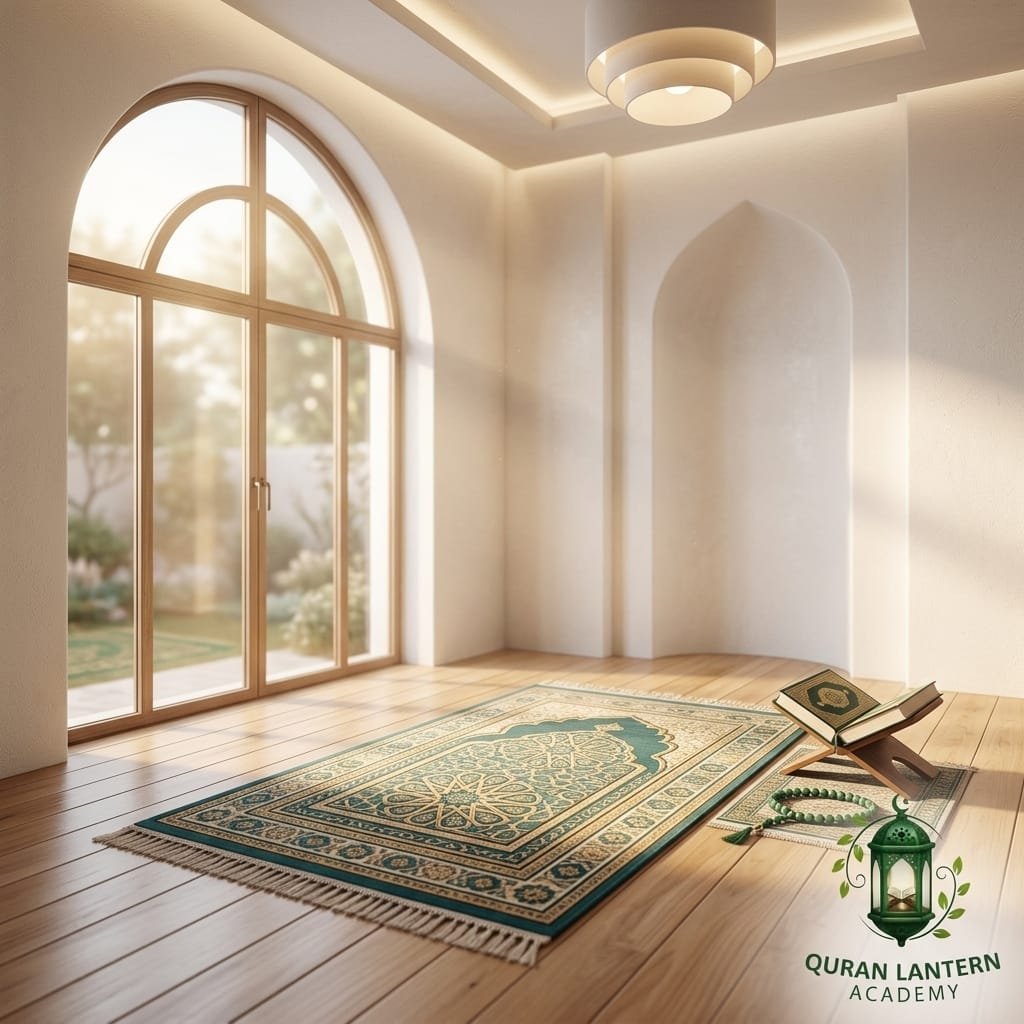
Welcome to the Heart of Islamic Worship: The Daily Prayer
As a new Muslim, taking your first steps into Islam is an incredible and deeply spiritual journey. Among all the beautiful practices you will learn, the daily ritual prayer—known in Arabic as Salah—is the very heartbeat of your new faith. It is not merely a daily chore or an obligation to check off your list; rather, it is a precious, daily appointment with your Creator, Allah (swt).
We completely understand that learning how to pray can feel a bit overwhelming at first. You might look at the different postures, the Arabic recitations, and the physical movements and think, “I will never remember all of this!” Take a deep breath. Allah sees your sincere efforts, your stumbles, and your desire to please Him. The Prophet Muhammad (peace be upon him) taught us that learning takes time, and even if prayer is difficult for you at first, you receive a double reward for your perseverance. Welcome to this journey, and let’s break down the prayer together, step by step.
Understanding the Basics Before You Begin
Before you stand on your prayer rug, there are a few foundational preparations you need to make. Think of these as setting the stage for a wonderful, intimate conversation with the Most Merciful.
1. Purification (Wudu)
Before praying, Muslims perform a ritual washing called Wudu (ablution). This washes away physical impurities and symbolizes spiritual cleansing. It involves washing your hands, mouth, nose, face, arms up to the elbows, wiping your head, and washing your feet. Don’t worry if you haven’t memorized every step of Wudu yet; take it one step at a time with a cheat sheet nearby.
2. Modest Clothing and a Clean Space
You will need to ensure your body is properly covered in modest clothing. For men, this generally means covering from the navel to the knees. For women, it means covering the entire body except for the face and hands. Find a quiet, clean spot in your home, roll out a clean mat or rug, and you are ready to begin.
3. Facing the Qiblah
All Muslims pray facing the Qiblah, which is the direction of the Kaaba in Mecca, Saudi Arabia. If you are in a Western country, this is usually directed towards the East or Northeast. There are many smartphone apps that can help you find this direction instantly.
The Five Daily Prayers
As you grow in your practice, you will learn that Muslims pray five times a day, spread out from dawn until late evening:
- Fajr: The dawn prayer, prayed before sunrise.
- Dhuhr: The midday prayer, prayed after the sun passes its peak.
- Asr: The late afternoon prayer.
- Maghrib: The sunset prayer, prayed right after the sun goes down.
- Isha: The night prayer, prayed in complete darkness.
Each prayer consists of cycles called Rak’ahs. For example, Fajr has 2 Rak’ahs, while Dhuhr has 4. Start slowly. If you only know how to pray one prayer right now, master that one first before adding the others.
Step-by-Step Guide to Performing One Rak’ah (Unit of Prayer)
Every prayer is made up of one or more Rak’ahs. Let’s walk through a single Rak’ah together so you can visualize the process:
Step 1: The Intention (Niyyah) and Opening Takbir
Stand upright facing the Qiblah. You don’t need to speak your intention out loud; simply know in your heart which prayer you are about to perform. Raise your hands to your ears or shoulders and say, “Allahu Akbar” (God is the Greatest). This phrase is called the Takbir and it officially marks the beginning of your prayer, shutting out the distractions of the outside world.
Step 2: Standing and Reciting Al-Fatihah
Place your right hand over your left hand on your chest or stomach. In this standing position, you recite the opening chapter of the Quran, known as Surah Al-Fatihah. If you are a complete beginner and haven’t memorized it yet, don’t worry! You can read it from a paper or phone, or simply glorify Allah by saying SubhanAllah (Glory be to Allah) quietly until you learn it.
Step 3: Bowing (Ruku)
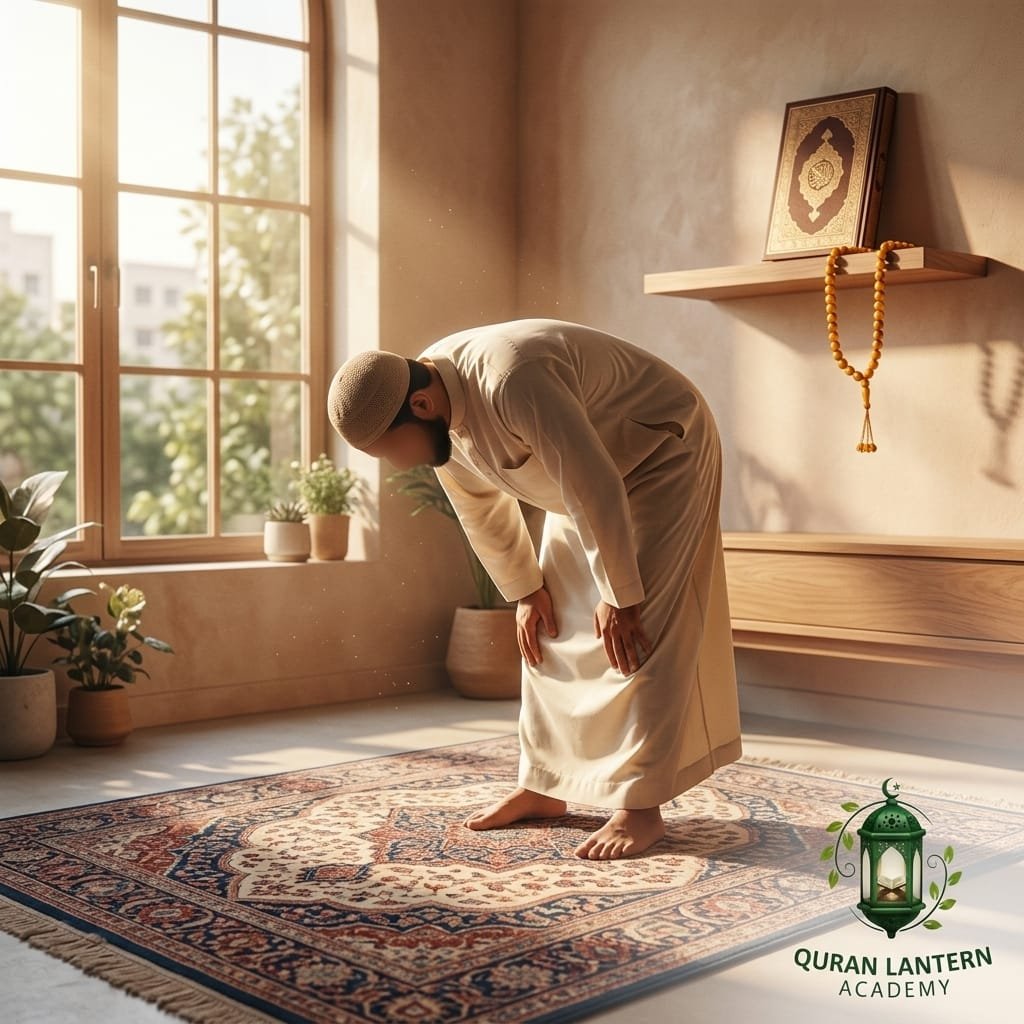
Say Allahu Akbar again and bow forward from your hips, keeping your back straight and placing your hands on your knees. While in this position, bow in humility and say quietly: “Subhana Rabbiyal Azeem” (Glory be to my Lord, the Magnificent) three times.
Step 4: Standing Back Up
Rise back up to a standing position, saying: “Sami’Allahu liman hamidah” (Allah hears the one who praises Him), followed by “Rabbana wa lakal hamd” (Our Lord, to You belongs all praise).
Step 5: Prostration (Sujood)
This is the most physically and spiritually humbling position in prayer. Say Allahu Akbar and lower yourself gently to the ground, touching seven parts of your body to the floor: your forehead and nose, both hands, both knees, and the toes of both feet. While in prostration, you are closer to Allah than at any other time. Whisper softly: “Subhana Rabbiyal A’la” (Glory be to my Lord, the Most High) three times.
Step 6: Sitting Between Prostrations
Push yourself up from prostration to a seated position on your knees, saying Allahu Akbar. Pause for a brief moment, asking Allah for forgiveness and mercy, then perform a second prostration just like the first one.
How to Apply This in Your Daily Life
Knowing the steps is one thing, but building a consistent habit takes gentle strategy. Here is how you can practically apply this knowledge as a new Muslim:
- Take it One Step at a Time: Do not try to learn all five prayers perfectly on day one. Start by learning just one prayer (like Maghrib or Isha) and practice it daily until it feels natural.
- Use Cheat Sheets and Audio Aids: Prop your phone or a printout of the prayer steps in front of you on a stand. There is no shame in reading from a guide while you pray. Allah looks at your sincere heart, not your perfection.
- Set Gentle Reminders: Download a Muslim prayer times app and set gentle notifications so you can track the shifting times of the day.
- Be Patient with Yourself: You will forget steps. You will lose your concentration. This is completely normal! Just gently bring your focus back and keep going. Shaytan wants you to feel discouraged and quit, but Allah loves the small, consistent deeds you offer Him.
Conclusion
Learning to pray is one of the most rewarding milestones in your journey as a new Muslim. Remember that you are never alone on this path. At Quran Lantern Academy, we are deeply committed to walking right beside you, offering compassionate guidance, supportive community, and authentic Islamic education tailored just for reverts. Take a deep breath, lay out your prayer mat, and take that first beautiful step toward your Creator today.