A Gentle Beginner’s Guide on How to Pray in Islam
Assalamu Alaikum (Peace be upon you), dear friend! Welcome to the beautiful fold of Islam. Taking the step to embrace Islam is a life-changing moment, and naturally, one of the very first questions on your heart and mind will be: how to pray in islam?
If you are feeling a little overwhelmed, take a deep breath and let your shoulders drop. You are not expected to know everything overnight. Allah (God) looks at your sincere effort, your patience, and the love in your heart, not your perfection. In this comprehensive guide, we will break down the Islamic prayer (known as Salah) into simple, stress-free steps so you can begin your journey with confidence.
Understanding the Heart of Salah
Before looking at the physical movements, it helps to understand what prayer actually is in Islam. Salah is not just a chore to check off a daily list; it is a direct, beautiful conversation between you and your Creator. Five times a day, you are invited to pause the chaos of worldly life, stand before Allah, and whisper your gratitude, your worries, and your hopes.
The Prophet Muhammad (peace be upon him) taught us that prayer is the coolness of the believer’s eyes. When you learn how to pray in islam, you are essentially learning how to find your sanctuary, a peaceful safe space available to you anytime, anywhere.
The Daily Rhythm: The Five Prayers
As a Muslim, you will perform five daily prayers spread throughout the sun’s cycle. They are:
- Fajr: The dawn prayer, prayed before sunrise.
- Dhuhr: The midday prayer, prayed after the sun passes its peak.
- Asr: The afternoon prayer, prayed in the late afternoon.
- Maghrib: The sunset prayer, prayed right after the sun sets.
- Isha: The night prayer, prayed in the evening darkness.
Each prayer takes only about 5 to 10 minutes. Think of them as spiritual pitstops to refuel your soul.
Step-by-Step: How to Pray in Islam
Let’s walk through the physical and spiritual actions of a single prayer unit (called a Rak’ah). Take it one step at a time!
Step 1: Purity and Preparation (Wudu)
Before praying, you need to perform a ritual washing called Wudu (ablution). This washes away minor physical impurities and helps you mentally transition into a state of focus and cleanliness. It involves washing your hands, mouth, nose, face, arms up to the elbows, wiping your head and ears, and washing your feet.
Step 2: Dressing Properly and Facing the Qibla
Stand in a clean space on a prayer mat. Ensure your clothing covers your body modestly (for men, from navel to knee; for women, the entire body except the face and hands). Face the direction of the Kaaba in Makkah, known as the Qibla.
Step 3: Setting the Intention (Niyyah)
You don’t need to shout or whisper your intention out loud. Simply make a firm intention in your heart: “I am performing the [Name of Prayer] prayer for the sake of Allah.”
Step 4: The Opening Declaration (Takbir)
Raise your hands to your shoulders or earlobes and say: “Allahu Akbar” (God is the Greatest). From this moment on, you are standing in the presence of the Divine, so try to keep your eyes focused on the spot where your head will touch the floor during prostration.
Step 5: Standing and Reciting
Place your right hand over your left hand on your chest or upper abdomen. Recite quietly:
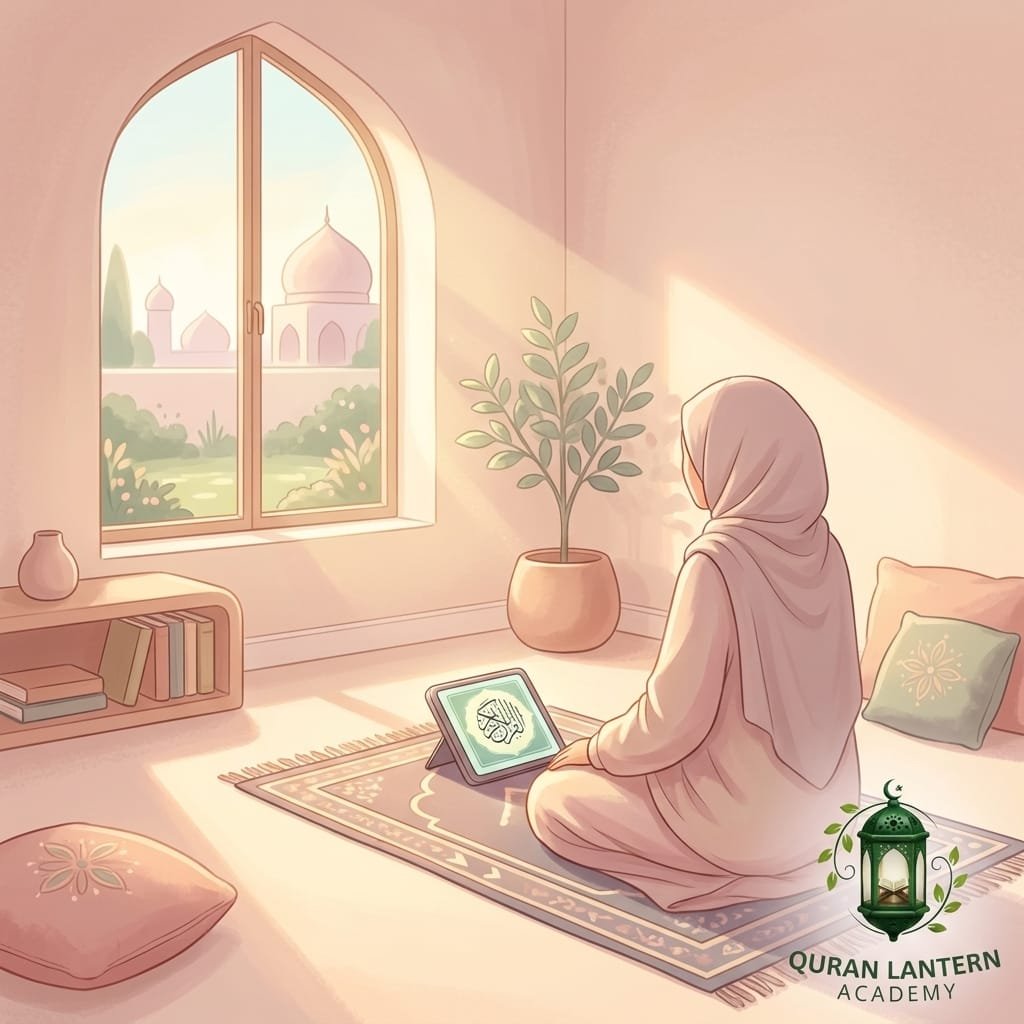
- Surah Al-Fatihah: The opening chapter of the Quran (it’s completely okay to read this from a phone or paper as a beginner!).
- A short chapter or a few verses from the Quran.
Step 6: Bowing (Ruku)
Say “Allahu Akbar” and bow at the waist with your back straight and hands on your knees. Quietly say: “Subhana Rabbiyal Adheem” (Glory be to my Lord, the Magnificent) three times.
Step 7: Rising and Prostrating (Sujud)
Rise back up saying, “Sami’Allahu liman hamidah” (Allah hears the one who praises Him), followed by “Rabbana wa lakal hamd” (Our Lord, to You belongs all praise).
Then, say “Allahu Akbar” and gently lower yourself into prostration (Sujud). Your forehead, nose, palms, knees, and toes should touch the ground. This is your closest physical position to Allah. Whisper: “Subhana Rabbiyal A’la” (Glory be to my Lord, the Most High) three times.
Step 8: Sitting and the Concluding Peace
Sit back on your heels briefly, then perform a second prostration. After that, sit up to recite the final testimony of faith (Tashahhud) and send peace upon the prophets. Finally, turn your face to the right saying “Assalamu alaykum wa rahmatullah” (Peace and mercy of Allah be upon you), and then to the left, repeating the same phrase.
How to Apply This in Your Daily Life
Learning how to pray in islam is a journey of grace, not a race. Here are a few compassionate tips to help you integrate prayer into your daily routine without feeling overwhelmed:
- Take it one prayer at a time: If doing all five feels daunting right now, start with one or two a day, and gradually build up.
- Use cheat sheets and apps: It is completely normal to hold a piece of paper or use a smartphone app to read the Arabic words or English transliteration while you pray. Allah knows your heart and effort!
- Be patient with your memory: Do not pressure yourself to memorize everything at once. Focus on one verse or phrase a week.
- Make dua (supplication): After you finish your structured prayer, sit for a moment and talk to Allah in your native language. Tell Him your fears, ask for His guidance, and thank Him for bringing you home to Islam.
Conclusion
Embracing the daily prayer is one of the most rewarding parts of being a Muslim. Remember that every stumble, every forgotten step, and every moment of confusion is met with divine mercy and love. You are doing wonderfully! Here at Quran Lantern Academy, we are dedicated to walking right beside you on this beautiful spiritual journey. May Allah make your transition smooth, fill your heart with peace, and accept your sincere prayers. Ameen!